
Europe is easier to understand when you meet the people who live in it.
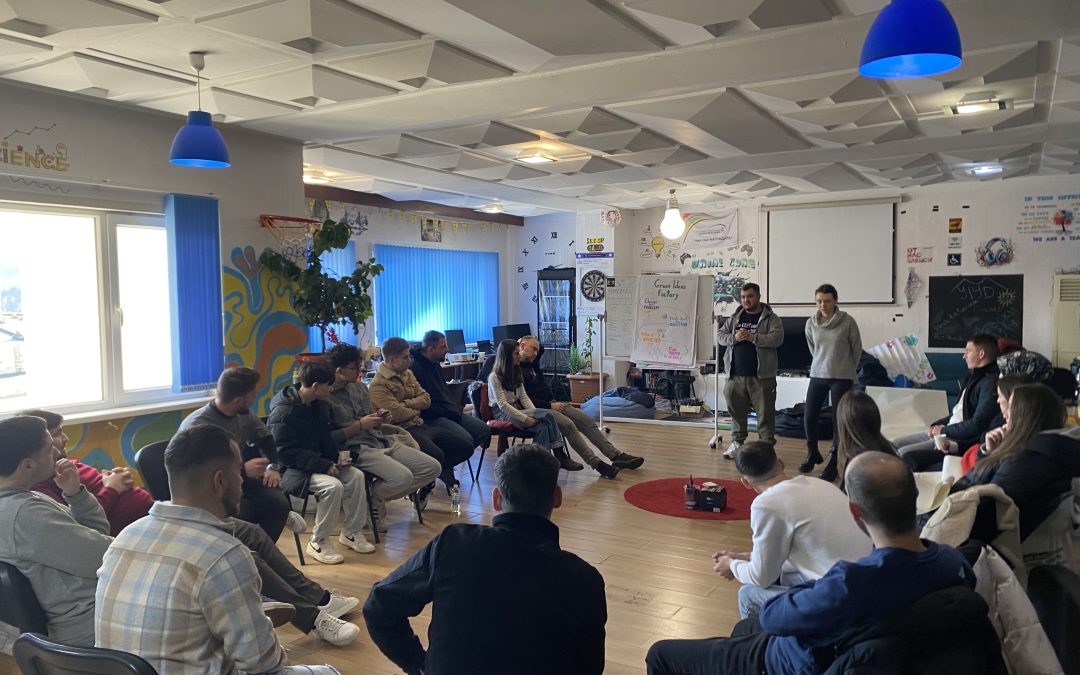
This simple idea was visible throughout “Sustainable Youth Action for Community Impact,” which brought young people from Bulgaria, Romania and Greece together in Smolyan from 22 to 31 December 2025.
The youth exchange created a temporary international community in the heart of the Rhodope Mountains.
Participants arrived with different languages, personal experiences, traditions and expectations.
Over the following days, those differences became part of the educational process.
The young people worked in mixed international teams, participated in discussions, completed community challenges, explored Smolyan and reflected together on sustainability, citizenship, European values and community participation.
Intercultural learning emerged naturally.
Participants discovered differences between their countries, but they also encountered many similarities.
The geographical closeness of Bulgaria, Romania and Greece does not mean that young people automatically know each other’s realities.
International mobility provides something online communication cannot fully replace: everyday interaction.
Eating together, solving tasks, navigating misunderstandings, laughing together and discussing social issues create relationships that make another country feel less distant.
The official feedback showed a particularly strong result in this area.
All three group leader reports indicated that the youth exchange strengthened participants’ European sense of belonging.
The reports also identified positive results in cooperation with people from different cultural backgrounds, tolerance towards other people’s values and behaviour and openness towards Europe’s multicultural character.
These results are significant because European citizenship cannot be developed only through information about European institutions.
It also develops through human contact.
When a young person from Smolyan works together with someone from Romania or Greece, European cooperation becomes personal.
Participants also discussed democracy, equality, citizenship and civil rights.
According to the feedback, the exchange increased awareness of these concepts and strengthened participants’ willingness to express their opinions and take action when something in their surroundings does not work.
This connects European belonging with local responsibility.
Feeling European should not mean becoming less interested in your local community.
Ideally, it should encourage young people to recognise that local challenges are connected with wider European questions and that citizens can learn from solutions developed elsewhere.
This was one of the strongest messages of the exchange.
Europe was not presented as something external to Smolyan.
For ten days, Europe was present in Smolyan through the friendships, discussions, disagreements, shared experiences and ideas of young people from three neighbouring European countries.
Disclaimer: Funded by the European Union. Views and opinions expressed are, however, those of the author(s) only and do not necessarily reflect those of the European Union or the competent programme authorities. Neither the European Union nor the granting authority can be held responsible for them.