
16 October 2026 | Madan, Bulgaria
Youth organisations, informal groups, educational partners and community stakeholders explore new opportunities for cooperation and the development of sustainable youth-led spaces.
Strong youth communities are built through cooperation, shared responsibility and the belief that young people can become active contributors to local development.
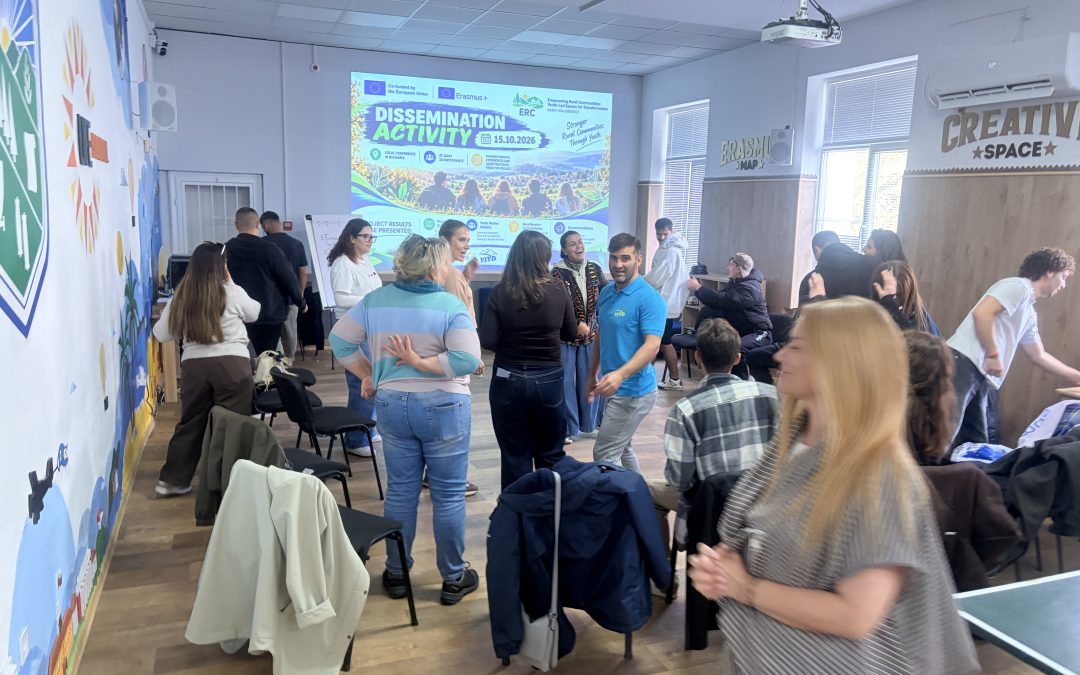
On 16 October 2026, Young Improvers for Youth Development (YIYD) continued its local dissemination activities under the Erasmus+ project “Empowering Rural Communities: Youth-Led Spaces for Transformation” (ERC) with a stakeholder-focused event in Madan, Bulgaria.
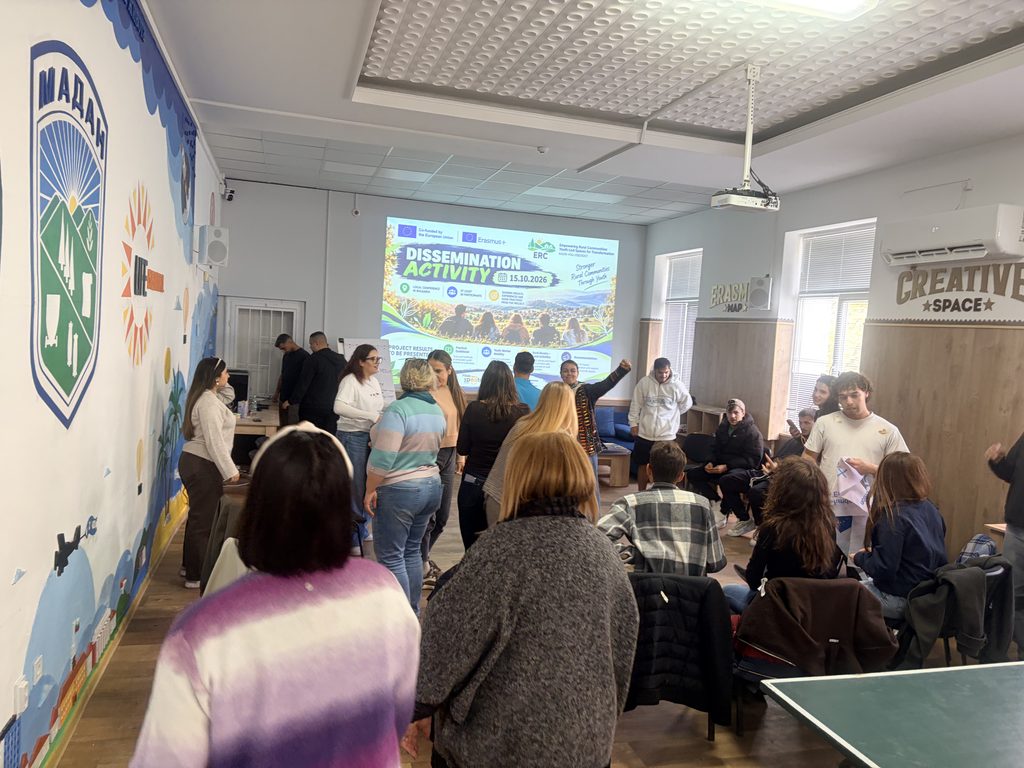
Hosted in the local youth space, the initiative brought together representatives of non-governmental organisations, informal youth groups, educational partners and other local stakeholders interested in strengthening opportunities for young people in the region.
The event provided an opportunity to share the project’s results, exchange practical experiences and explore how cooperation between different community actors can contribute to the development of sustainable youth-led spaces.
Madan: A Community with Potential for Youth-Led Development
Rural and mountainous communities often face challenges related to limited youth infrastructure, fewer educational opportunities and restricted access to international programmes.
However, these communities also possess valuable resources: motivated young people, committed educators, active local organisations and strong community relationships.
The ERC project seeks to build upon these strengths by encouraging practical cooperation and introducing innovative approaches to youth work.
During the visit to Madan, participants had the opportunity to explore the local youth space and discuss its potential as a meeting point for non-formal education, volunteering, creativity and community engagement.
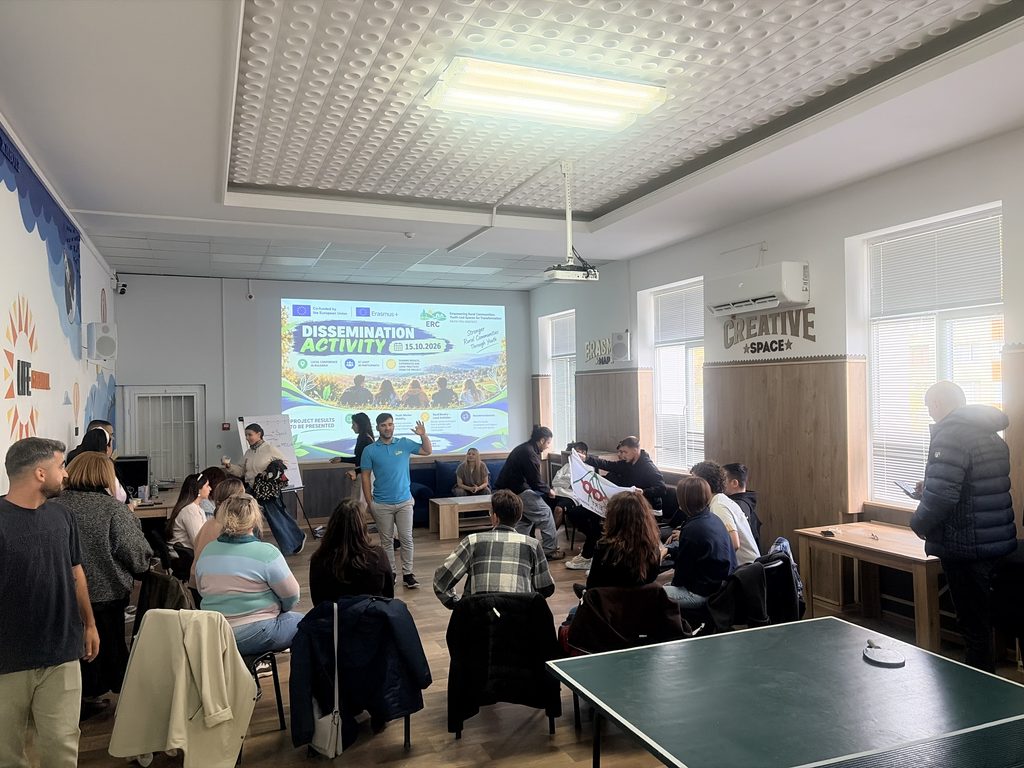
The exchange highlighted the importance of accessible environments where young people feel welcome, supported and encouraged to develop their own initiatives.
Presenting the ERC Project and Its Results
A central part of the dissemination activity was dedicated to introducing the objectives and achievements of the ERC partnership.
Implemented through cooperation between organisations from Bulgaria, Romania and Poland, the project focuses on empowering rural communities by strengthening the competencies of youth workers and supporting the development of youth-led spaces.
Participants were introduced to the project’s main results, including the international youth worker mobility in Romania, the development of educational resources and the implementation of local non-formal education activities.
Particular attention was given to how these results can be adapted and applied in communities such as Madan.
A Practical Guidebook for Sustainable Youth Spaces
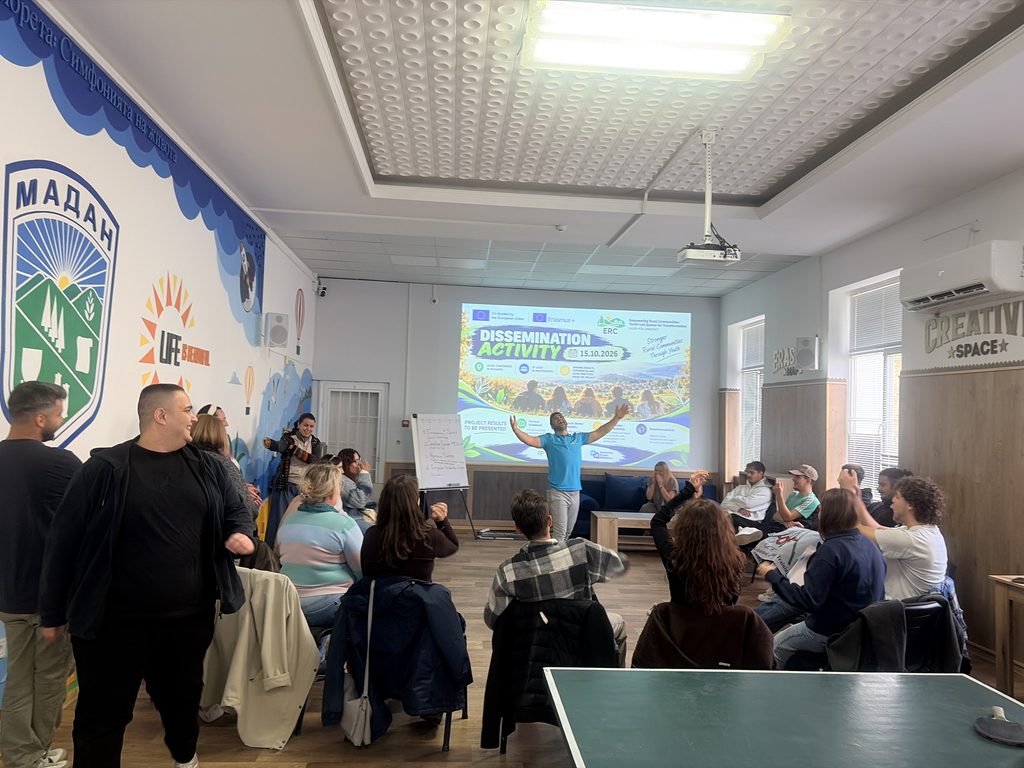
One of the highlights of the event was the presentation of the “Practical Guidebook for Establishing and Managing Youth Spaces in Rural Areas.”
Coordinated by YIYD and developed through international cooperation, the publication provides practical guidance for youth organisations, educators, informal groups and community stakeholders.
The Guidebook addresses essential aspects of youth space development, including needs assessment, cooperation with local authorities, organisational management, educational programming, inclusion and financial sustainability.
For the participants in Madan, the resource offered a valuable framework for considering how existing spaces and community initiatives could be strengthened through youth participation and cross-sector cooperation.
Drawing on the practical experience of YIYD in Smolyan and surrounding communities, the discussion explored how successful youth work approaches can be transferred and adapted to different local environments.
Connecting NGOs, Informal Groups and Educational Institutions
An important objective of the event was to encourage dialogue between different organisations and stakeholder groups.
Representatives of NGOs, informal youth initiatives and educational partners exchanged perspectives on the opportunities and challenges facing young people in the region.
The discussions emphasised several important priorities:
- Strengthening cooperation between youth organisations and schools.
- Encouraging young people to participate in planning and implementing local activities.
- Making better use of existing community spaces and resources.
- Developing inclusive non-formal educational opportunities.
- Exploring possibilities for future joint initiatives and international cooperation.
The exchange demonstrated that sustainable youth development requires the involvement of different community actors working towards common objectives.
A youth space becomes truly valuable when it connects people, encourages participation and creates opportunities that extend beyond its physical walls.
From Shared Experience to Future Cooperation
The stakeholder discussions also explored how the knowledge developed through the ERC project could support future local initiatives.
The Practical Guidebook served as a reference point for reflecting on the essential elements of a successful youth space, including youth ownership, accessibility, community involvement and long-term sustainability.
Participants were encouraged to consider how cooperation between educational institutions, civil society organisations and informal youth groups could contribute to more consistent and accessible youth activities.
The event reinforced the importance of recognising young people as active partners in local development rather than simply as beneficiaries of educational programmes.
International Cooperation with Local Impact
The ERC partnership demonstrates how Erasmus+ can connect European expertise with the practical needs of local communities.
Through the collaboration of Young Improvers for Youth Development (Bulgaria), Filiala Asociației Se Poate (Romania) and Społeczna Grupa Medialna (Poland), the project has developed educational resources and approaches that can be used beyond the participating organisations.
The dissemination activity in Madan contributed to making these results accessible to local stakeholders and encouraging their application in future youth work initiatives.
For YIYD, this represents an essential dimension of international project cooperation: ensuring that knowledge and experience gained through European partnerships reach communities where they can make a meaningful difference.
Building the Future Together
We would like to express our sincere gratitude to all representatives of local organisations, informal groups, educational institutions and community stakeholders who contributed to the exchange in Madan.
Their participation and openness to cooperation reflect the importance of building strong local partnerships for sustainable youth development.
We also extend our appreciation to our international partners and the Erasmus+ Programme for supporting the exchange of knowledge, methodologies and good practices across European rural communities.
The activity in Madan reinforces a principle that guides our work:
When young people, organisations, schools and communities work together, youth spaces become platforms for lasting transformation.
The ERC project continues to demonstrate that meaningful European cooperation begins with local action — and that even the smallest communities can become centres of innovation, participation and opportunity.
PROJECT INFORMATION
Project: Empowering Rural Communities: Youth-Led Spaces for Transformation (ERC)
Project reference: KA210-YOU-25B37DC7
Programme: Erasmus+ | KA210-YOU
Activity: Local Dissemination – Activity 5
Date: 16 October 2026
Location: Youth Space, Madan, Bulgaria
Organiser: Young Improvers for Youth Development (YIYD)
Target groups: Youth organisations, informal groups, educational partners and local stakeholders
Partner countries: Bulgaria, Romania and Poland
EU FUNDING ACKNOWLEDGEMENT
🇪🇺 Co-funded by the European Union.
This publication was developed within the framework of the Erasmus+ project “Empowering Rural Communities: Youth-Led Spaces for Transformation” (ERC).
Views and opinions expressed are, however, those of the author(s) only and do not necessarily reflect those of the European Union or the granting authority. Neither the European Union nor the granting authority can be held responsible for them.