On 12 December, the international project “The Power of W – Sustainable Energy for Developing European Towns” reached its formal conclusion through its Final Online Conference, held via Zoom at 12:00 PM CET. The event served as the project’s culminating dissemination moment and brought together over 120 participants online, including representatives of partner organisations, public institutions, academic stakeholders, civil society actors, practitioners, and community members who had followed and supported the work across the participating countries. The conference was widely recognised as a milestone occasion, not only because it marked the official closure of the project, but because it consolidated a shared European understanding of how gender equality, inclusion, and innovation could jointly shape the sustainable energy transition in smaller towns and regions.
The Final Conference was designed as a structured platform for presenting the project’s strategic outcomes, reflecting on cumulative learning, and translating experience into long-term value. It brought into one coherent space the many strands developed throughout the project’s lifespan: local experimentation, international peer learning, cross-sector partnerships, and community-driven engagement with energy transition topics. Rather than functioning as a ceremonial endpoint, the conference operated as a synthesis mechanism—capturing what had been achieved, making the results accessible to broader audiences, and establishing a credible baseline for follow-up actions beyond the project’s official timeline.
A shared European overview of achievements and measurable progress
A central focus of the conference programme was the Achievement Evaluation, during which partners presented a detailed review of the project’s implementation across participating communities. The evaluation segment did not simply list activities; it interpreted them critically and connected them to observable changes in stakeholder engagement, increased visibility of women’s leadership in the energy field, and strengthened institutional cooperation at local level. Presentations highlighted how the project had supported inclusive formats for participation and encouraged women and girls to engage more confidently with sustainability topics—whether through educational sessions, mentorship-oriented activities, municipal engagement, or exhibitions and public events.
Partners reported that one of the strongest contributions of The Power of W had been its ability to make sustainable energy understandable and relevant to local realities. The project’s activities repeatedly demonstrated that energy transition was not purely technical; it was social, economic, and cultural. In this sense, gender equality was not treated as an “additional theme,” but as a structural requirement for credible sustainability policies. The evaluation reflected how local stakeholders—from youth groups to municipal representatives—had increasingly positioned women’s participation as an indicator of quality and legitimacy in sustainability-related decision-making.
Policy Guide Launch as the project’s long-term legacy product
A highly anticipated moment during the Final Conference was the Policy Guide Launch, which formally introduced the project guide containing consolidated policy recommendations, best practices, and implementation-oriented insights. The guide was presented as a practical tool for institutions and organisations seeking to strengthen gender-responsive approaches in energy and sustainability strategies. It was also framed as a transferable model, designed to be useful beyond the partner countries and applicable across European contexts that faced similar demographic, economic, and geographic challenges.
The guide’s presentation emphasised that effective policy could not be created in isolation. It needed to be shaped by those who implemented sustainability in real conditions: local governments, educators, civil society, community leaders, and women innovators. The launch underscored how The Power of W had generated not only lessons learned but structured, credible recommendations—reflecting multi-country experience and tested approaches rather than purely theoretical assumptions.
Expert and partner panels: sustainability through the lens of inclusion and innovation
The conference’s panel discussions were among the most engaging and intellectually dense segments of the day. Interactive sessions brought together project partners, invited experts, and stakeholders with practical policy experience to address sustainability and innovation in the energy sector through the lens of inclusion. These discussions examined what it took to move from awareness to action and from action to systems change. Attention was placed on the ways women’s participation reshaped not only representation, but the quality of solutions—often leading to approaches that were more community-sensitive, socially sustainable, and education-oriented.
Speakers reflected on persistent barriers, including unequal access to leadership pathways, the gender gap in STEM fields, and the underrepresentation of women in energy-related decision-making. At the same time, the discussions highlighted measurable opportunities: local-level pilot initiatives, mentorship models, awareness campaigns, and community-based partnerships capable of creating tangible entry points for women in the green transition. The tone remained academically grounded, yet clearly forward-looking, with repeated emphasis on policy coherence, cross-sector coordination, and the need for continuing investment in gender-responsive sustainability work.
Formal networking: closing a project, strengthening collaboration
The Final Conference also included a structured networking session, designed to facilitate post-project collaboration. This component was treated as a strategic element rather than an informal add-on. Participants used the session to connect across sectors and countries, identify shared interests, and discuss practical next steps. New partnership ideas emerged around joint initiatives in community energy engagement, training models for women entering green professions, local campaigns, and future EU-funded cooperation frameworks.
The networking session demonstrated a key outcome of The Power of W: trust-based collaboration had been built, and partners had developed not only shared terminology, but shared working methods. This strengthened the project’s credibility as a platform that generated continuity rather than closure.
The “last chapter” that opened future chapters
The Final Conference was widely experienced as the “last chapter” of a powerful European journey—yet its narrative was not framed as an ending. It was framed as a transition into a new phase of responsibility, where the partners and stakeholders who had contributed to the project would now carry its lessons forward. The presence of over 120 online participants reinforced the project’s dissemination strength and confirmed the relevance of its themes beyond the partnership consortium.
The event concluded with a collective acknowledgement that sustainable energy development in European towns required more than infrastructure—it required social legitimacy, equity, and participation. Gender equality emerged not as a separate ambition, but as a central driver of sustainability outcomes. The conference affirmed that the future of energy transition would be stronger, more inclusive, and more effective when women’s leadership was recognised, supported, and structurally embedded in policy and practice.
By the end of the Final Conference, The Power of W had been presented not only as a completed project, but as a consolidated body of shared European knowledge. The conference successfully disseminated achievements, launched a policy legacy product, strengthened networks, and demonstrated a coherent vision for the next steps in gender equality within sustainable energy development. It left participants with a clear understanding that the project’s most valuable outcome was not only what had been implemented, but what had been made possible: new alliances, practical guidance, community confidence, and a strong European message that inclusive sustainability was no longer optional—it was essential.
Ten days ago, participants from Bulgaria, Romania and Greece arrived in Smolyan as separate national groups.
Today saying goodbye felt much harder than many of us expected.
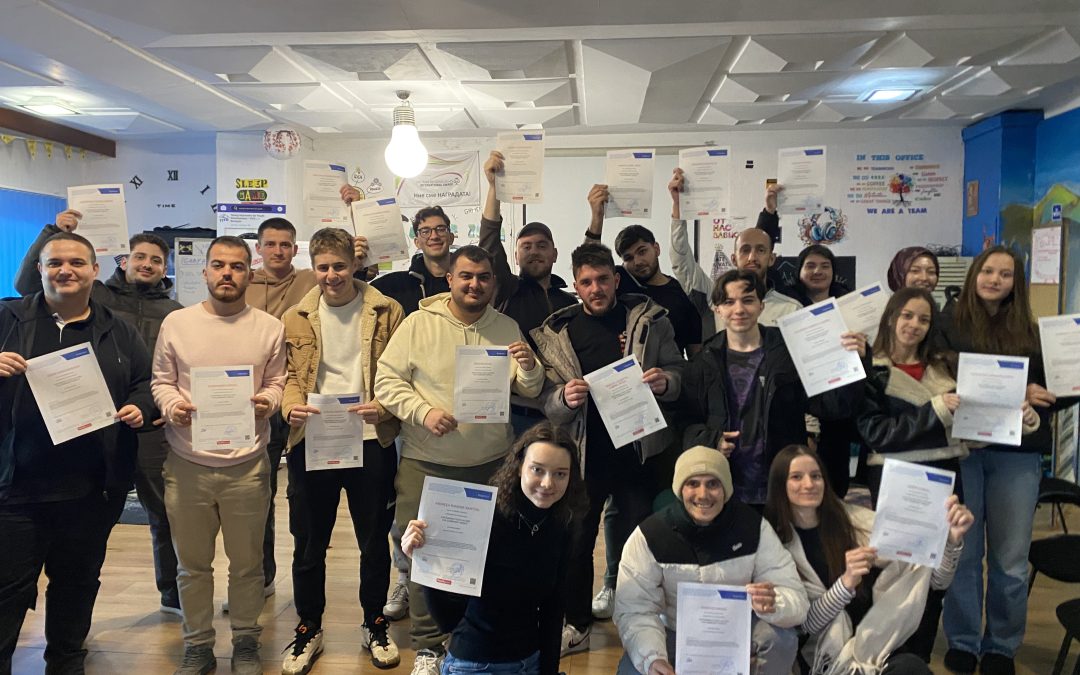
The final day was dedicated to evaluation, reflection, Youthpass and looking back at everything we experienced during “Sustainable Youth Action for Community Impact.”
We revisited our expectations from the beginning of the exchange.
Some had come hoping to improve their English.
Others wanted to meet people.
Some were interested in sustainability.
Some simply wanted to experience Erasmus+ for the first time.
The final reflection showed that the project became much more than any single expectation.
We learned about sustainability and responsible consumption.
We discussed democracy and active citizenship.
We explored Smolyan through a community treasure hunt and PhotoVoice activities.
We spoke with local people.
We discovered Rhodope culture and stories.
We visited RIEW Smolyan and connected environmental learning with institutional practice.
Most importantly, we learned how to cooperate with people we had never met before.
The official feedback from the exchange also reflects these results.
The reports confirmed strong outcomes related to teamwork, intercultural cooperation, critical thinking, tolerance, active citizenship and European belonging.
But numbers cannot capture everything.
They cannot measure the inside jokes created during ten days.
They cannot measure the first time somebody had enough confidence to speak English in front of the whole group.
They cannot measure how strange it feels when people who were strangers one week ago suddenly feel like friends.
That is another kind of Erasmus+ impact.
Before leaving, we received Youthpass and reflected on the competences we developed.
But perhaps the most important question came at the very end:
What happens next?
If everything stays only in Smolyan, the project ends today.
If we return home and share something, change something, participate more actively or motivate another young person to take an opportunity, then the project continues.
So this is not really the end.
It is simply the moment when 19 young participants take the experience of Smolyan back to Bulgaria, Romania and Greece.
Thank you, Erasmus+.
Thank you, Smolyan.
And hopefully — see you somewhere in Europe again.
Project: 2025-1-BG01-KA151-YOU-000298009 Erasmus+ Youth Accreditation: 2023-1-BG01-KA150-YOU-000193502 Activity: Sustainable Youth Action for Community Impact Dates: 22–31 December 2025 Host: Young Improvers for Youth Development (YIYD), Smolyan, Bulgaria
Disclaimer: Funded by the European Union. Views and opinions expressed are, however, those of the author(s) only and do not necessarily reflect those of the European Union or the competent programme authorities. Neither the European Union nor the granting authority can be held responsible for them.
A successful Erasmus+ Youth Exchange should leave behind more than photographs.
It should create knowledge, skills, relationships and motivation that continue after participants return home.
This was the ambition of “Sustainable Youth Action for Community Impact,” implemented in Smolyan, Bulgaria, from 22 to 31 December 2025.
The activity brought together 19 young participants and three group leaders from Bulgaria, Romania and Greece.
The programme combined sustainability, environmental awareness, active citizenship, community participation, European values, intercultural dialogue and non-formal education.
Quantitatively, the mobility exceeded its initial participant target.
The indicative objective was 18 participants, while the activity involved 19 young participants.
Inclusion was also significant: 14 of the 19 participants were participants with fewer opportunities.
Green mobility produced another strong result, with all 22 people involved in the exchange recorded as using sustainable means of transport.
However, numbers tell only part of the story.
The official group leader reports provide important evidence of the educational impact.
All three reports confirmed that participants benefited from the exchange.
They also reported positive outcomes in teamwork, adapting to new situations, cooperating with people from different backgrounds and cultures, tolerance, understanding European multiculturalism, critical thinking and active citizenship.
All reports indicated an increased European sense of belonging.
Participants were also reported as more willing to take action to change things that do not work in their surroundings and more prepared to express and defend their opinions.
The exchange also supported practical skills.
Feedback identified improvements in communication, media and social media content creation and awareness of future learning opportunities.
Not every indicator was equally strong.
Results related to increased self-confidence, independence and clearer personal and professional goals reached 66.67% in the three group leader reports.
Rather than ignoring the difference, the organisation identified it as a learning point.
Future exchanges can strengthen individual goal-setting, personal reflection and follow-up after mobility so that longer-term personal development is monitored more systematically.
This approach reflects the purpose of Erasmus+ accreditation: not simply to repeat activities, but to learn from each implementation cycle and continuously improve quality.
All participants also received Youthpass, supporting recognition of the competences developed during the mobility.
For Young Improvers for Youth Development, the exchange contributed to a wider long-term objective: making European learning opportunities more accessible to young people in Smolyan and the Rhodope region while strengthening active citizenship and the quality of local youth work.
The real result of the project therefore cannot be reduced to ten days in December.
It continues through the skills participants developed, the friendships created between Bulgaria, Romania and Greece, the ideas brought back to local communities and the young people who will discover Erasmus+ because someone who participated decides to share their experience.
That is how mobility becomes impact.
Project: 2025-1-BG01-KA151-YOU-000298009 Accreditation: 2023-1-BG01-KA150-YOU-000193502 Programme: Erasmus+ Youth Activity: Sustainable Youth Action for Community Impact Dates: 22–31 December 2025 Host location: Smolyan, Bulgaria
Disclaimer: Funded by the European Union. Views and opinions expressed are, however, those of the author(s) only and do not necessarily reflect those of the European Union or the competent programme authorities. Neither the European Union nor the granting authority can be held responsible for them.
During the previous days we explored sustainability, responsible consumption, environmental protection, active citizenship, European values, local culture and community participation.
We worked in international teams, explored Smolyan, talked to local people and learned from each other.
But Erasmus+ should not finish when we pack our suitcases.
Today we worked on ideas for transferring the experience back to our communities.
Participants discussed possible local actions, awareness activities, volunteering, sharing the Erasmus+ experience with peers and using social media to communicate positive messages.
We also explored how photographs, videos and personal stories can become tools for dissemination.
One of the most powerful things about Erasmus+ is that people often trust a participant’s story more than an official advertisement.
Someone saying:
“I went there. I was afraid at first. I met people from other countries. I managed to communicate. I learned something useful. You can do it too.”
can motivate another young person much more effectively than a formal brochure.
We therefore discussed our role as multipliers.
The 19 participants in this exchange can reach classmates, friends, colleagues, families and other young people.
One mobility can indirectly reach hundreds of people if participants continue sharing what they experienced.
Today was also connected strongly with reflection and Youthpass.
We looked back at the different competences we had developed:
communication,
teamwork,
critical thinking,
intercultural competence,
initiative,
active citizenship,
environmental awareness,
media skills,
and the ability to learn from experience.
Sometimes we focus so much on completing activities that we do not notice how much we have actually learned.
Youthpass helps make that learning visible.
Tomorrow is our final day.
It is strange how quickly ten days can pass.
Disclaimer: Funded by the European Union. Views and opinions expressed are, however, those of the author(s) only and do not necessarily reflect those of the European Union or the competent programme authorities. Neither the European Union nor the granting authority can be held responsible for them.
Today our sustainability discussions moved from youth work into the institutional world.
We visited the Regional Inspectorate of Environment and Water – Smolyan (RIEW Smolyan) and learned more about environmental protection in the region.
During the previous days, we had mostly looked at sustainability from the perspective of individuals and young people.
Today we added another piece to the puzzle:
What is the role of institutions?
Environmental protection cannot depend only on whether one person recycles or chooses sustainable transport.
It also requires monitoring, regulations, expertise, public institutions and cooperation between different actors.
The visit was especially meaningful because we are in the Rhodope Mountains.
Nature is everywhere around Smolyan.
Forests, mountain ecosystems and biodiversity are not abstract subjects here.
They are directly connected with local life.
During the educational visit we had the opportunity to connect our project themes with a real institution working on environmental issues.
We also thought about the relationship between citizens and public authorities.
Institutions need public participation.
Citizens need reliable institutions.
And young people need to understand how both sides can communicate.
For the participants from Romania and Greece, the visit also created an opportunity to compare environmental approaches across countries.
Different systems may use different structures, but many challenges are shared.
Climate change does not stop at national borders.
Pollution does not ask for a passport.
Protecting biodiversity is therefore naturally connected with international cooperation.
After the visit we discussed what surprised us and how institutional learning can be integrated into youth projects.
Our conclusion was that international exchanges become much more interesting when participants do not stay isolated from the host community.
Meeting local organisations and institutions gives context to everything we discuss.
Today sustainability became a little less theoretical and much more real.
Disclaimer: Funded by the European Union. Views and opinions expressed are, however, those of the author(s) only and do not necessarily reflect those of the European Union or the competent programme authorities. Neither the European Union nor the granting authority can be held responsible for them