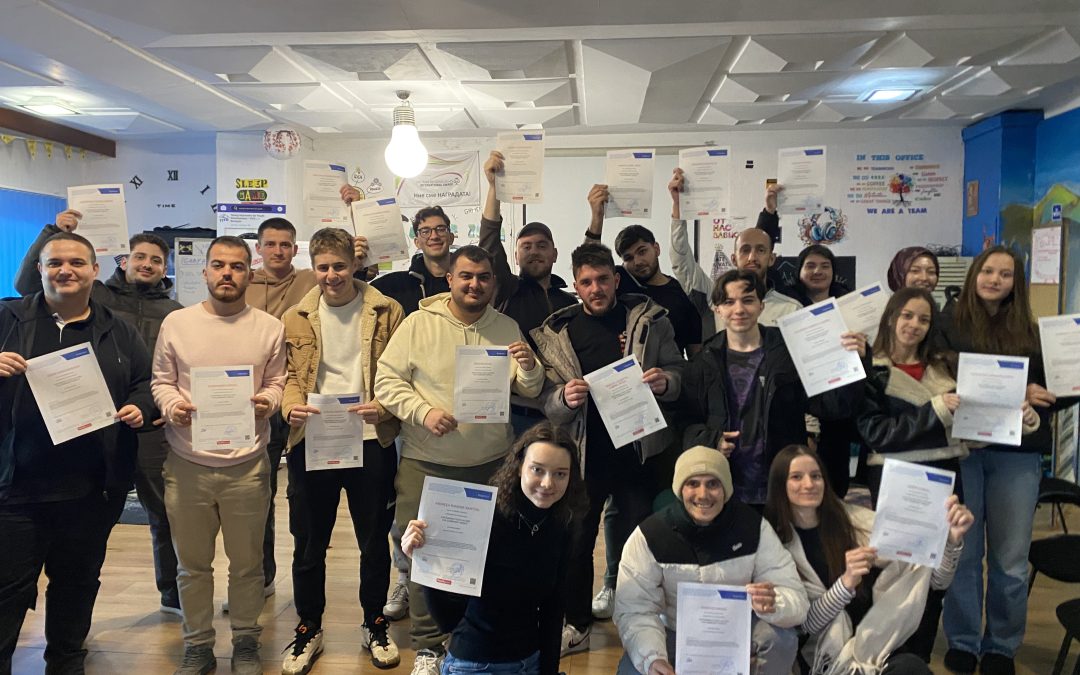
by Futureforall | Dec 30, 2025 | Uncategorized
A successful Erasmus+ Youth Exchange should leave behind more than photographs.
It should create knowledge, skills, relationships and motivation that continue after participants return home.
This was the ambition of “Sustainable Youth Action for Community Impact,” implemented in Smolyan, Bulgaria, from 22 to 31 December 2025.
The activity brought together 19 young participants and three group leaders from Bulgaria, Romania and Greece.
The programme combined sustainability, environmental awareness, active citizenship, community participation, European values, intercultural dialogue and non-formal education.
Quantitatively, the mobility exceeded its initial participant target.
The indicative objective was 18 participants, while the activity involved 19 young participants.
Inclusion was also significant: 14 of the 19 participants were participants with fewer opportunities.
Green mobility produced another strong result, with all 22 people involved in the exchange recorded as using sustainable means of transport.
However, numbers tell only part of the story.
The official group leader reports provide important evidence of the educational impact.
All three reports confirmed that participants benefited from the exchange.
They also reported positive outcomes in teamwork, adapting to new situations, cooperating with people from different backgrounds and cultures, tolerance, understanding European multiculturalism, critical thinking and active citizenship.
All reports indicated an increased European sense of belonging.
Participants were also reported as more willing to take action to change things that do not work in their surroundings and more prepared to express and defend their opinions.
The exchange also supported practical skills.
Feedback identified improvements in communication, media and social media content creation and awareness of future learning opportunities.
Not every indicator was equally strong.
Results related to increased self-confidence, independence and clearer personal and professional goals reached 66.67% in the three group leader reports.
Rather than ignoring the difference, the organisation identified it as a learning point.
Future exchanges can strengthen individual goal-setting, personal reflection and follow-up after mobility so that longer-term personal development is monitored more systematically.
This approach reflects the purpose of Erasmus+ accreditation: not simply to repeat activities, but to learn from each implementation cycle and continuously improve quality.
All participants also received Youthpass, supporting recognition of the competences developed during the mobility.
For Young Improvers for Youth Development, the exchange contributed to a wider long-term objective: making European learning opportunities more accessible to young people in Smolyan and the Rhodope region while strengthening active citizenship and the quality of local youth work.
The real result of the project therefore cannot be reduced to ten days in December.
It continues through the skills participants developed, the friendships created between Bulgaria, Romania and Greece, the ideas brought back to local communities and the young people who will discover Erasmus+ because someone who participated decides to share their experience.
That is how mobility becomes impact.
Project: 2025-1-BG01-KA151-YOU-000298009
Accreditation: 2023-1-BG01-KA150-YOU-000193502
Programme: Erasmus+ Youth
Activity: Sustainable Youth Action for Community Impact
Dates: 22–31 December 2025
Host location: Smolyan, Bulgaria
Disclaimer: Funded by the European Union. Views and opinions expressed are, however, those of the author(s) only and do not necessarily reflect those of the European Union or the competent programme authorities. Neither the European Union nor the granting authority can be held responsible for them.

by Futureforall | Dec 29, 2025 | Uncategorized
Our exchange is almost over.
Today the main question was no longer:
What have we learned?
It became:
What are we going to do with it?
During the previous days we explored sustainability, responsible consumption, environmental protection, active citizenship, European values, local culture and community participation.
We worked in international teams, explored Smolyan, talked to local people and learned from each other.
But Erasmus+ should not finish when we pack our suitcases.
Today we worked on ideas for transferring the experience back to our communities.
Participants discussed possible local actions, awareness activities, volunteering, sharing the Erasmus+ experience with peers and using social media to communicate positive messages.
We also explored how photographs, videos and personal stories can become tools for dissemination.
One of the most powerful things about Erasmus+ is that people often trust a participant’s story more than an official advertisement.
Someone saying:
“I went there. I was afraid at first. I met people from other countries. I managed to communicate. I learned something useful. You can do it too.”
can motivate another young person much more effectively than a formal brochure.
We therefore discussed our role as multipliers.
The 19 participants in this exchange can reach classmates, friends, colleagues, families and other young people.
One mobility can indirectly reach hundreds of people if participants continue sharing what they experienced.
Today was also connected strongly with reflection and Youthpass.
We looked back at the different competences we had developed:
communication,
teamwork,
critical thinking,
intercultural competence,
initiative,
active citizenship,
environmental awareness,
media skills,
and the ability to learn from experience.
Sometimes we focus so much on completing activities that we do not notice how much we have actually learned.
Youthpass helps make that learning visible.
Tomorrow is our final day.
It is strange how quickly ten days can pass.
Disclaimer: Funded by the European Union. Views and opinions expressed are, however, those of the author(s) only and do not necessarily reflect those of the European Union or the competent programme authorities. Neither the European Union nor the granting authority can be held responsible for them.

by Futureforall | Dec 29, 2025 | Uncategorized
Today our sustainability discussions moved from youth work into the institutional world.
We visited the Regional Inspectorate of Environment and Water – Smolyan (RIEW Smolyan) and learned more about environmental protection in the region.
During the previous days, we had mostly looked at sustainability from the perspective of individuals and young people.
Today we added another piece to the puzzle:
What is the role of institutions?
Environmental protection cannot depend only on whether one person recycles or chooses sustainable transport.
It also requires monitoring, regulations, expertise, public institutions and cooperation between different actors.
The visit was especially meaningful because we are in the Rhodope Mountains.
Nature is everywhere around Smolyan.
Forests, mountain ecosystems and biodiversity are not abstract subjects here.
They are directly connected with local life.
During the educational visit we had the opportunity to connect our project themes with a real institution working on environmental issues.
We also thought about the relationship between citizens and public authorities.
Institutions need public participation.
Citizens need reliable institutions.
And young people need to understand how both sides can communicate.
For the participants from Romania and Greece, the visit also created an opportunity to compare environmental approaches across countries.
Different systems may use different structures, but many challenges are shared.
Climate change does not stop at national borders.
Pollution does not ask for a passport.
Protecting biodiversity is therefore naturally connected with international cooperation.
After the visit we discussed what surprised us and how institutional learning can be integrated into youth projects.
Our conclusion was that international exchanges become much more interesting when participants do not stay isolated from the host community.
Meeting local organisations and institutions gives context to everything we discuss.
Today sustainability became a little less theoretical and much more real.
Disclaimer: Funded by the European Union. Views and opinions expressed are, however, those of the author(s) only and do not necessarily reflect those of the European Union or the competent programme authorities. Neither the European Union nor the granting authority can be held responsible for them
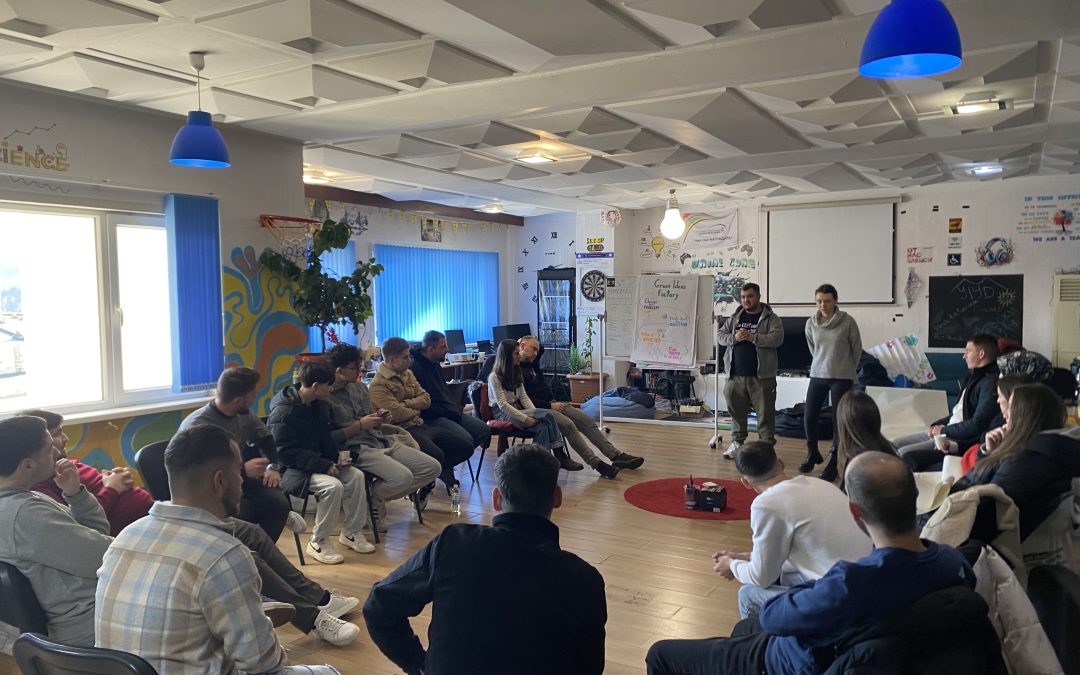
by Futureforall | Dec 29, 2025 | Uncategorized
Europe is easier to understand when you meet the people who live in it.
This simple idea was visible throughout “Sustainable Youth Action for Community Impact,” which brought young people from Bulgaria, Romania and Greece together in Smolyan from 22 to 31 December 2025.
The youth exchange created a temporary international community in the heart of the Rhodope Mountains.
Participants arrived with different languages, personal experiences, traditions and expectations.
Over the following days, those differences became part of the educational process.
The young people worked in mixed international teams, participated in discussions, completed community challenges, explored Smolyan and reflected together on sustainability, citizenship, European values and community participation.
Intercultural learning emerged naturally.
Participants discovered differences between their countries, but they also encountered many similarities.
The geographical closeness of Bulgaria, Romania and Greece does not mean that young people automatically know each other’s realities.
International mobility provides something online communication cannot fully replace: everyday interaction.
Eating together, solving tasks, navigating misunderstandings, laughing together and discussing social issues create relationships that make another country feel less distant.
The official feedback showed a particularly strong result in this area.
All three group leader reports indicated that the youth exchange strengthened participants’ European sense of belonging.
The reports also identified positive results in cooperation with people from different cultural backgrounds, tolerance towards other people’s values and behaviour and openness towards Europe’s multicultural character.
These results are significant because European citizenship cannot be developed only through information about European institutions.
It also develops through human contact.
When a young person from Smolyan works together with someone from Romania or Greece, European cooperation becomes personal.
Participants also discussed democracy, equality, citizenship and civil rights.
According to the feedback, the exchange increased awareness of these concepts and strengthened participants’ willingness to express their opinions and take action when something in their surroundings does not work.
This connects European belonging with local responsibility.
Feeling European should not mean becoming less interested in your local community.
Ideally, it should encourage young people to recognise that local challenges are connected with wider European questions and that citizens can learn from solutions developed elsewhere.
This was one of the strongest messages of the exchange.
Europe was not presented as something external to Smolyan.
For ten days, Europe was present in Smolyan through the friendships, discussions, disagreements, shared experiences and ideas of young people from three neighbouring European countries.
Disclaimer: Funded by the European Union. Views and opinions expressed are, however, those of the author(s) only and do not necessarily reflect those of the European Union or the competent programme authorities. Neither the European Union nor the granting authority can be held responsible for them.

by Futureforall | Dec 28, 2025 | Uncategorized
Today we became young community researchers.
Our challenge was to communicate directly with local people and listen to their perspectives about Smolyan, young people, community life and opportunities for participation.
At first, approaching strangers felt uncomfortable.
You never know whether somebody will have time to answer.
But after the first few conversations, the experience became much easier.
We worked in international teams, asked questions, listened and compared different answers.
Some conversations were short.
Others unexpectedly became much deeper.
We heard different opinions about what people appreciate about Smolyan and what they believe could improve.
The activity reminded us of something important:
When we speak about community development, we should not start by assuming that we already know what everyone needs.
We have to listen first.
This is also an important principle of youth participation.
Young people often say:
“Nobody listens to us.”
Today we realised that active citizenship also requires us to become good listeners.
We discussed youth opportunities, Erasmus+, non-formal education and participation.
For some local people, seeing a group of young Bulgarians, Romanians and Greeks carrying out activities in Smolyan was itself a conversation starter.
That made us understand another impact of international mobility.
An Erasmus+ project does not affect only its official participants.
When activities move into the community, local people see international cooperation happening in front of them.
Europe suddenly becomes much more concrete.
After returning to the group, we compared our observations.
There was no single answer to the question “What does Smolyan need?”
And that is probably exactly the point.
Communities are complex.
Different people have different priorities.
The role of active citizens is not to find one magical solution.
It is to create spaces where people can communicate, participate and work together.
Today we practised exactly that.
Disclaimer: Funded by the European Union. Views and opinions expressed are, however, those of the author(s) only and do not necessarily reflect those of the European Union or the competent programme authorities. Neither the European Union nor the granting authority can be held responsible for them.

by Futureforall | Dec 28, 2025 | Uncategorized
Today we continued exploring Smolyan, but this time our focus was culture, heritage and local identity.
Being part of an international project means learning about Europe, but today reminded us that Europe is made up of thousands of very specific local stories.
One of the cultural themes we explored was the connection between the Rhodope Mountains and the legend of Orpheus and Eurydice.
Some of us already knew the myth.
Others heard it in detail for the first time.
But discussing it here, surrounded by the Rhodope Mountains, made the story feel completely different.
Our missions and conversations also introduced us to local traditions, Rhodope vocabulary, food, stories and elements of cultural heritage.
For the international participants, trying to understand regional words was both educational and extremely funny.
For the Bulgarian participants, the activity had another effect.
Sometimes you do not realise how unique something from your own culture is until you have to explain it to somebody from another country.
We also discussed the difference between cultural appreciation and stereotypes.
Intercultural learning is not simply saying:
“Bulgarians eat this.”
“Greeks do that.”
“Romanians are like this.”
Real culture is much more complicated.
Every country contains different regions, generations, traditions and personal identities.
Our international group itself proves that.
Even participants from the same country do not always share the same habits or opinions.
Today helped us understand European diversity from a local perspective.
We can feel strongly connected to our town, region or national identity while at the same time belonging to a wider European community.
These identities do not need to compete with each other.
They can complement each other.
At the end of the day, we realised that cultural exchange does not happen only during an “intercultural evening”.
It happens every time somebody asks:
Why do you do that?
What does that word mean?
Why is this place important to you?
What is the story behind this tradition?
Those questions probably taught us more about each other than any presentation could.
Disclaimer: Funded by the European Union. Views and opinions expressed are, however, those of the author(s) only and do not necessarily reflect those of the European Union or the competent programme authorities. Neither the European Union nor the granting authority can be held responsible for them.
