by Futureforall | Dec 29, 2025 | Uncategorized
Europe is easier to understand when you meet the people who live in it.
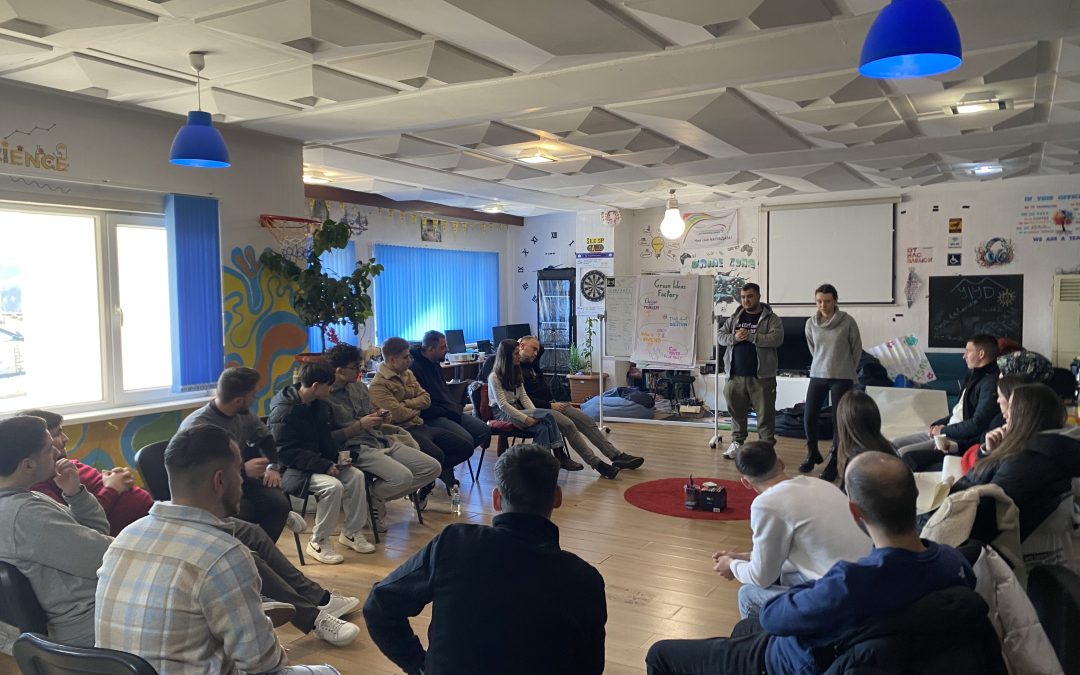
This simple idea was visible throughout “Sustainable Youth Action for Community Impact,” which brought young people from Bulgaria, Romania and Greece together in Smolyan from 22 to 31 December 2025.
The youth exchange created a temporary international community in the heart of the Rhodope Mountains.
Participants arrived with different languages, personal experiences, traditions and expectations.
Over the following days, those differences became part of the educational process.
The young people worked in mixed international teams, participated in discussions, completed community challenges, explored Smolyan and reflected together on sustainability, citizenship, European values and community participation.
Intercultural learning emerged naturally.
Participants discovered differences between their countries, but they also encountered many similarities.
The geographical closeness of Bulgaria, Romania and Greece does not mean that young people automatically know each other’s realities.
International mobility provides something online communication cannot fully replace: everyday interaction.
Eating together, solving tasks, navigating misunderstandings, laughing together and discussing social issues create relationships that make another country feel less distant.
The official feedback showed a particularly strong result in this area.
All three group leader reports indicated that the youth exchange strengthened participants’ European sense of belonging.
The reports also identified positive results in cooperation with people from different cultural backgrounds, tolerance towards other people’s values and behaviour and openness towards Europe’s multicultural character.
These results are significant because European citizenship cannot be developed only through information about European institutions.
It also develops through human contact.
When a young person from Smolyan works together with someone from Romania or Greece, European cooperation becomes personal.
Participants also discussed democracy, equality, citizenship and civil rights.
According to the feedback, the exchange increased awareness of these concepts and strengthened participants’ willingness to express their opinions and take action when something in their surroundings does not work.
This connects European belonging with local responsibility.
Feeling European should not mean becoming less interested in your local community.
Ideally, it should encourage young people to recognise that local challenges are connected with wider European questions and that citizens can learn from solutions developed elsewhere.
This was one of the strongest messages of the exchange.
Europe was not presented as something external to Smolyan.
For ten days, Europe was present in Smolyan through the friendships, discussions, disagreements, shared experiences and ideas of young people from three neighbouring European countries.
Disclaimer: Funded by the European Union. Views and opinions expressed are, however, those of the author(s) only and do not necessarily reflect those of the European Union or the competent programme authorities. Neither the European Union nor the granting authority can be held responsible for them.

by Futureforall | Dec 28, 2025 | Uncategorized
Today we became young community researchers.
Our challenge was to communicate directly with local people and listen to their perspectives about Smolyan, young people, community life and opportunities for participation.
At first, approaching strangers felt uncomfortable.
You never know whether somebody will have time to answer.
But after the first few conversations, the experience became much easier.
We worked in international teams, asked questions, listened and compared different answers.
Some conversations were short.
Others unexpectedly became much deeper.
We heard different opinions about what people appreciate about Smolyan and what they believe could improve.
The activity reminded us of something important:
When we speak about community development, we should not start by assuming that we already know what everyone needs.
We have to listen first.
This is also an important principle of youth participation.
Young people often say:
“Nobody listens to us.”
Today we realised that active citizenship also requires us to become good listeners.
We discussed youth opportunities, Erasmus+, non-formal education and participation.
For some local people, seeing a group of young Bulgarians, Romanians and Greeks carrying out activities in Smolyan was itself a conversation starter.
That made us understand another impact of international mobility.
An Erasmus+ project does not affect only its official participants.
When activities move into the community, local people see international cooperation happening in front of them.
Europe suddenly becomes much more concrete.
After returning to the group, we compared our observations.
There was no single answer to the question “What does Smolyan need?”
And that is probably exactly the point.
Communities are complex.
Different people have different priorities.
The role of active citizens is not to find one magical solution.
It is to create spaces where people can communicate, participate and work together.
Today we practised exactly that.
Disclaimer: Funded by the European Union. Views and opinions expressed are, however, those of the author(s) only and do not necessarily reflect those of the European Union or the competent programme authorities. Neither the European Union nor the granting authority can be held responsible for them.

by Futureforall | Dec 28, 2025 | Uncategorized
Today we continued exploring Smolyan, but this time our focus was culture, heritage and local identity.
Being part of an international project means learning about Europe, but today reminded us that Europe is made up of thousands of very specific local stories.
One of the cultural themes we explored was the connection between the Rhodope Mountains and the legend of Orpheus and Eurydice.
Some of us already knew the myth.
Others heard it in detail for the first time.
But discussing it here, surrounded by the Rhodope Mountains, made the story feel completely different.
Our missions and conversations also introduced us to local traditions, Rhodope vocabulary, food, stories and elements of cultural heritage.
For the international participants, trying to understand regional words was both educational and extremely funny.
For the Bulgarian participants, the activity had another effect.
Sometimes you do not realise how unique something from your own culture is until you have to explain it to somebody from another country.
We also discussed the difference between cultural appreciation and stereotypes.
Intercultural learning is not simply saying:
“Bulgarians eat this.”
“Greeks do that.”
“Romanians are like this.”
Real culture is much more complicated.
Every country contains different regions, generations, traditions and personal identities.
Our international group itself proves that.
Even participants from the same country do not always share the same habits or opinions.
Today helped us understand European diversity from a local perspective.
We can feel strongly connected to our town, region or national identity while at the same time belonging to a wider European community.
These identities do not need to compete with each other.
They can complement each other.
At the end of the day, we realised that cultural exchange does not happen only during an “intercultural evening”.
It happens every time somebody asks:
Why do you do that?
What does that word mean?
Why is this place important to you?
What is the story behind this tradition?
Those questions probably taught us more about each other than any presentation could.
Disclaimer: Funded by the European Union. Views and opinions expressed are, however, those of the author(s) only and do not necessarily reflect those of the European Union or the competent programme authorities. Neither the European Union nor the granting authority can be held responsible for them.
by Futureforall | Dec 28, 2025 | Uncategorized
International mobility can be transformative, but only if young people are actually able to access it.
For that reason, inclusion was a central element of “Sustainable Youth Action for Community Impact.”
The Erasmus+ Youth Exchange brought together 19 young participants, of whom 14 were recorded as participants with fewer opportunities.
This means that almost three quarters of the young participant group included people facing barriers that could make international mobility more difficult.
The barriers identified within the wider project included geographical, cultural and economic challenges.
For an organisation working in Smolyan and the Rhodope Mountains, geographical barriers are particularly relevant.
Many young people live far from major airports, railway connections and large urban youth networks.
International opportunities may therefore require more planning, information and support.
The project aimed to ensure that these barriers did not automatically exclude young people.
Participants received practical information before travelling and support regarding routes, international mobility, the programme and adaptation to the multinational environment.
Group leaders played an important role in supporting younger participants and those with less previous international experience.
The learning environment also recognised cultural and linguistic diversity.
Participants were encouraged to communicate even when their English was not perfect. Small-group work, peer support and clear communication helped ensure that language confidence did not become an unnecessary barrier.
Another strong result was sustainable travel.
All 22 persons participating in the Youth Exchange – 19 young participants and three group leaders – were recorded as using sustainable means of transport.
This exceeded the initial indicative target of 16.
The combination of inclusion and sustainability is important.
Sometimes environmentally responsible mobility can be more complicated for participants living in peripheral areas.
Quality project management therefore requires balancing environmental goals with accessibility and participant support.
The Smolyan exchange demonstrated that the two principles can work together.
Most importantly, participants with fewer opportunities were not treated as a separate group during the educational programme.
The objective of additional support was to remove barriers, not create labels.
Once the participants arrived, they learned, worked and contributed together as one international group.
That approach represents the deeper meaning of inclusion in Erasmus+.
Inclusion is not only about counting how many participants belong to a category.
It is about ensuring that young people who might otherwise be excluded can reach the opportunity, participate fully and return home with the same sense of achievement and European belonging as everyone else.
Disclaimer: Funded by the European Union. Views and opinions expressed are, however, those of the author(s) only and do not necessarily reflect those of the European Union or the competent programme authorities. Neither the European Union nor the granting authority can be held responsible for them.

by Futureforall | Dec 27, 2025 | Uncategorized
Today was definitely one of the most dynamic days of our exchange.
Instead of staying inside, we received a challenge:
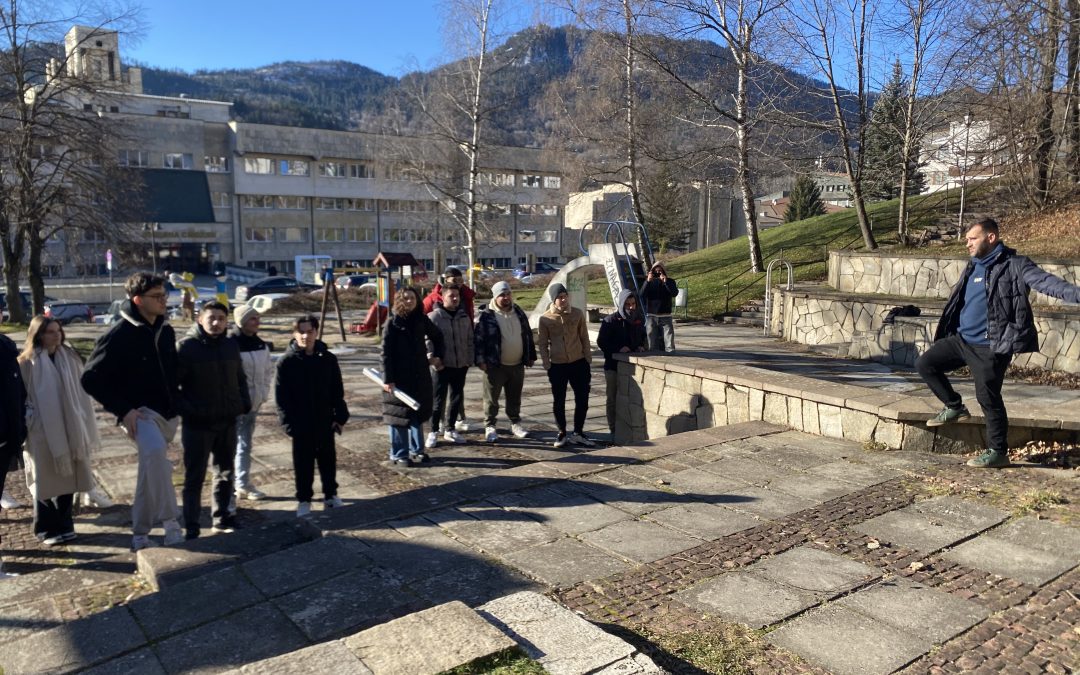
Go into Smolyan, explore it, talk to people, observe the community and complete a series of missions.
We were divided into small international teams and suddenly the city became our classroom.
The activity combined elements of a treasure hunt, community research, photography and PhotoVoice.
Our task was not simply to find places and take tourist pictures.
We had to look at Smolyan differently.
What represents the identity of the city?
What makes the community strong?
What challenges can we observe?
What could be improved?
What do local people think?
Some missions involved taking photographs that represented our interpretation of the city.
Others required us to communicate with local residents.
And suddenly the skills we had discussed during the previous days became very practical.
Speaking English inside an Erasmus+ group is one thing.
Approaching someone you do not know in the street and finding a way to communicate is completely different.
Sometimes Bulgarian participants helped with translation.
Sometimes we used simple words, gestures and creativity.
The goal was not linguistic perfection.
It was human connection.
PhotoVoice was another interesting method because it made us think about what a photograph can communicate.
A picture can show something beautiful.
But it can also show a problem.
A forgotten space.
A community resource.
A contradiction.
Or something we believe deserves more attention.
After returning, the teams shared what they had discovered.
We realised that although we had all explored the same city, every group had noticed something different.
That may be the most important lesson of the day.
Communities do not have only one story.
The way we understand a place depends on where we look, whom we ask and whether we are willing to listen.
Today Smolyan was no longer simply the location of our Erasmus+ project.
It became part of the project itself.
Disclaimer: Funded by the European Union. Views and opinions expressed are, however, those of the author(s) only and do not necessarily reflect those of the European Union or the competent programme authorities. Neither the European Union nor the granting authority can be held responsible for them.
by Futureforall | Dec 27, 2025 | Uncategorized
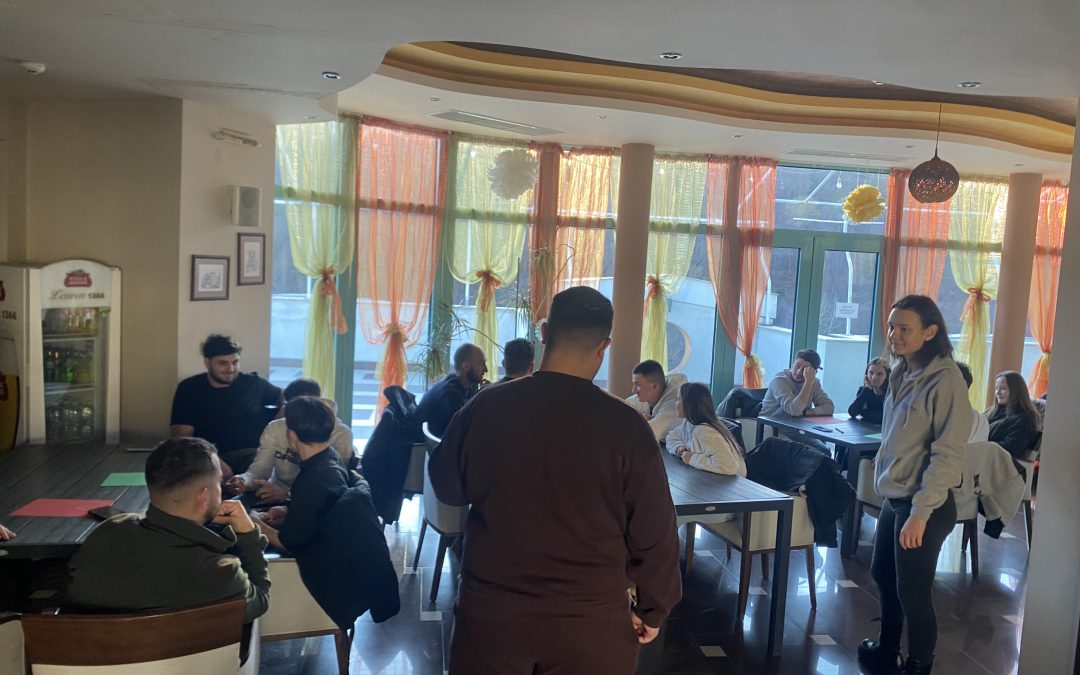
No desks in rows. No traditional exams. No teacher providing every answer.
Instead: international teamwork, challenges, discussion, reflection, creativity and learning through experience.
This was the educational approach behind “Sustainable Youth Action for Community Impact,” the Erasmus+ Youth Exchange held in Smolyan from 22 to 31 December 2025.
Non-formal education was not simply one method used during the project. It was the foundation of the programme.
Participants from Bulgaria, Romania and Greece were expected to become active creators of the learning process.
Activities included small-group work, practical missions, intercultural exchange, community exploration, creative tasks, discussions and structured reflection.
This approach allowed participants with different levels of experience to contribute.
Previous Erasmus+ participation was not necessary.
Perfect English was not necessary.
What mattered was motivation, willingness to communicate and readiness to participate.
Working in international teams was itself an educational experience.
Participants had to distribute responsibilities, explain ideas, manage different opinions and find common solutions.
Sometimes this process was more important than the final answer to the task.
Reflection helped participants recognise that learning.
At different points during the programme, the young people were encouraged to think about what they had discovered, which skills they were developing and how their attitudes were changing.
This supported the later Youthpass process and helped transform individual activities into an understandable learning journey.
Official participant feedback confirmed the strength of the educational methodology.
All three group leader reports gave positive assessments of the quality of non-formal education methods used during the youth exchange.
The reports also identified positive results in teamwork, adaptation to new situations, collaboration with people from different cultures, tolerance, critical thinking and active citizenship.
These are exactly the kinds of competences that are difficult to develop through passive learning alone.
Non-formal education creates room for young people to test themselves.
A participant who may remain silent during a lecture might become highly active during a team challenge.
Someone uncomfortable speaking in front of a large group may contribute strongly through photography, research or practical problem solving.
A young person with little international experience may discover that they can communicate and cooperate successfully with people from other countries.
That experience builds confidence in ways that cannot always be measured immediately.
For Young Improvers for Youth Development, non-formal education remains one of the strongest tools for creating meaningful international learning experiences.
The success of “Sustainable Youth Action for Community Impact” demonstrated once again that young people learn exceptionally well when they are trusted to participate actively in their own learning.
Disclaimer: Funded by the European Union. Views and opinions expressed are, however, those of the author(s) only and do not necessarily reflect those of the European Union or the competent programme authorities. Neither the European Union nor the granting authority can be held responsible for them.
