
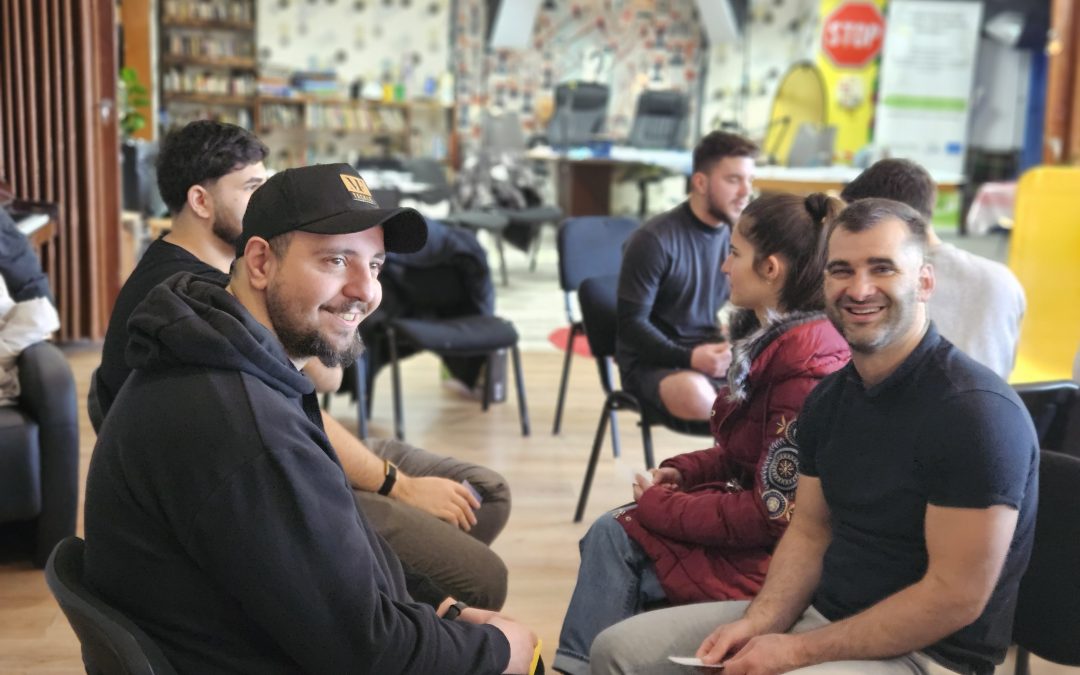
Today was about something every international project needs before discussing serious topics: trust, communication and teamwork.
Yesterday many of us arrived without knowing anyone outside our national group. Today we started breaking those invisible borders.
Through non-formal education activities, small international groups, communication exercises and teamwork challenges, we discovered much more about each other.
We talked about our expectations and also about the things that sometimes make international participation difficult — language confidence, fear of speaking in front of others, travelling for the first time or simply entering a group where everyone seems different.
One important message from today was that you do not need perfect English to participate actively.
Sometimes a drawing, a gesture, an example or support from another participant communicates more effectively than perfect grammar.
Working in mixed groups also showed us how different people approach the same task.
Sometimes we agreed immediately.
Sometimes we did not.
But even disagreement became part of the learning process.
We also started discussing what sustainability actually means to us.
Is sustainability only recycling?
Is it about climate change?
Transport?
Consumption?
Our communities?
Our personal choices?
Very quickly, we realised that the concept is much wider than we initially thought.
At the end of the day we had a reflection session where we looked back at what happened and what we learned about ourselves and the group.
Reflection may sound simple, but it changes the way you experience an Erasmus+ activity.
Instead of asking only, “Was today fun?”, we started asking:
What did I learn?
What did I contribute?
What challenged me?
What would I do differently tomorrow?
Only two days have passed, but the group already feels completely different.
We came to Smolyan as Bulgarians, Romanians and Greeks.
Today we started working as Europeans.
Disclaimer: Funded by the European Union. Views and opinions expressed are, however, those of the author(s) only and do not necessarily reflect those of the European Union or the competent programme authorities. Neither the European Union nor the granting authority can be held responsible for them.