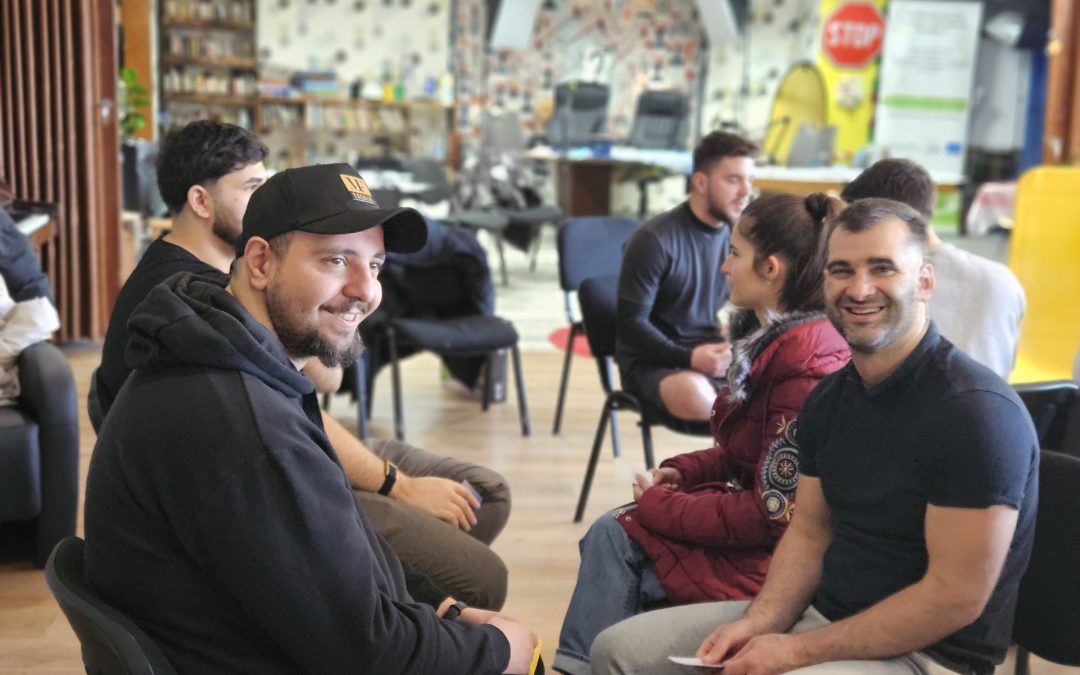
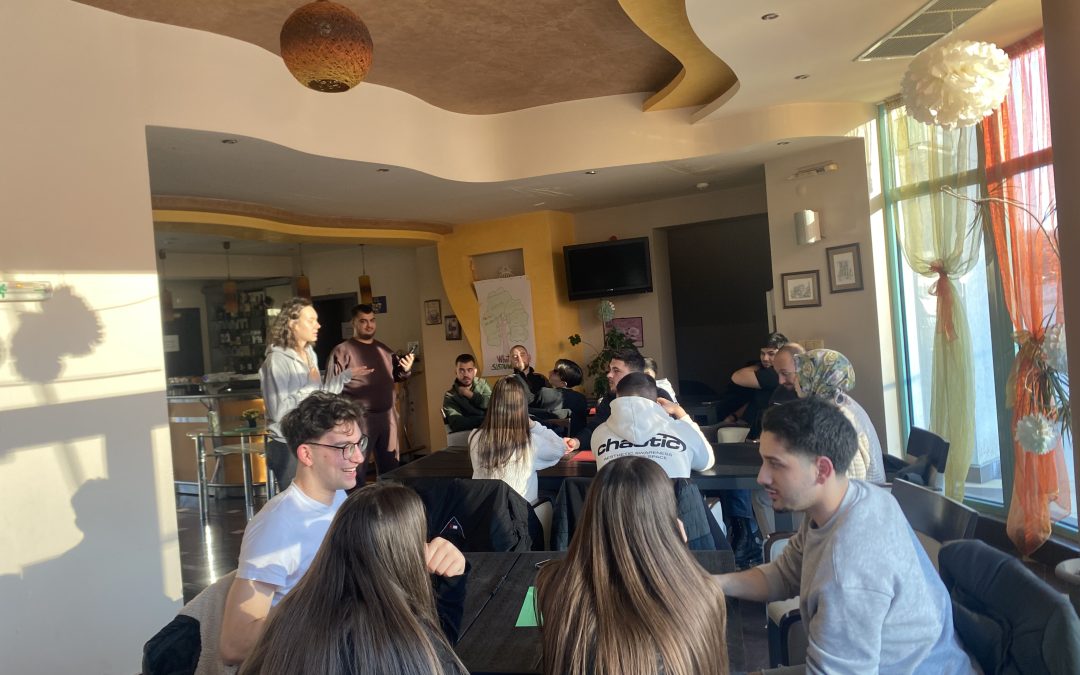
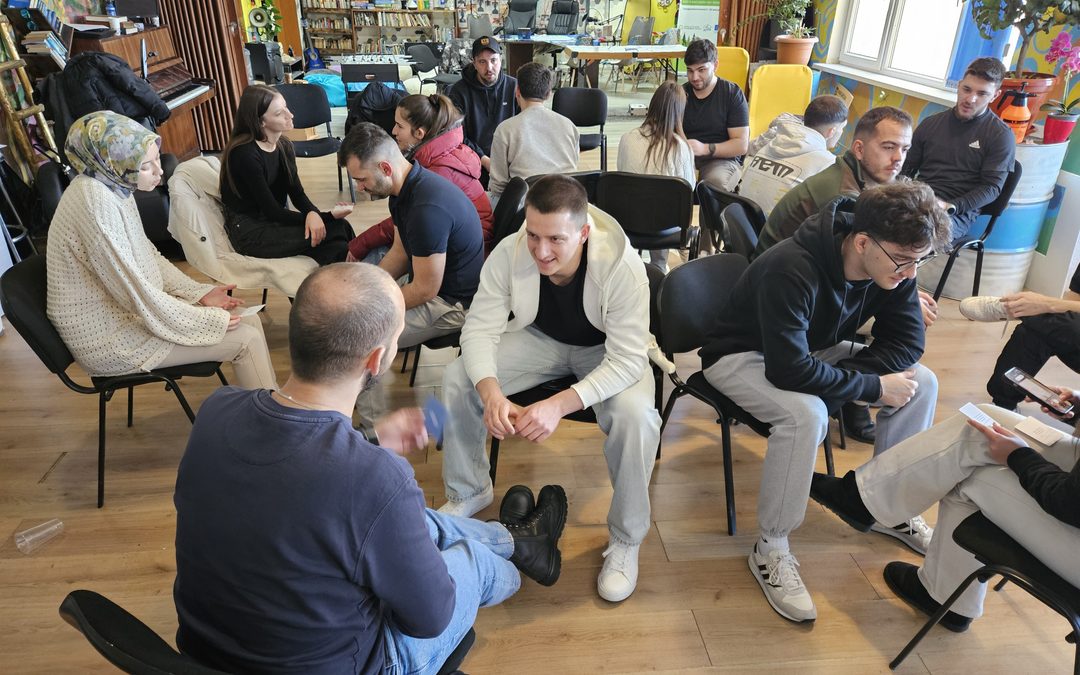
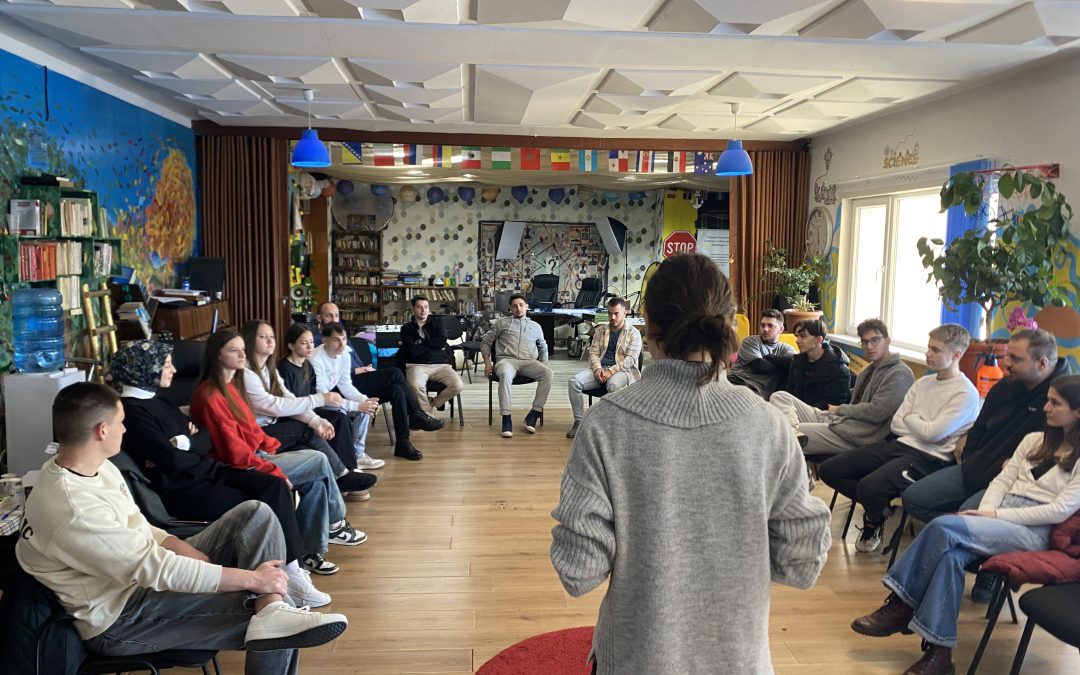
Today was about something every international project needs before discussing serious topics: trust, communication and teamwork.
Yesterday many of us arrived without knowing anyone outside our national group. Today we started breaking those invisible borders.
Through non-formal education activities, small international groups, communication exercises and teamwork challenges, we discovered much more about each other.
We talked about our expectations and also about the things that sometimes make international participation difficult — language confidence, fear of speaking in front of others, travelling for the first time or simply entering a group where everyone seems different.
One important message from today was that you do not need perfect English to participate actively.
Sometimes a drawing, a gesture, an example or support from another participant communicates more effectively than perfect grammar.
Working in mixed groups also showed us how different people approach the same task.
Sometimes we agreed immediately.
Sometimes we did not.
But even disagreement became part of the learning process.
We also started discussing what sustainability actually means to us.
Is sustainability only recycling?
Is it about climate change?
Transport?
Consumption?
Our communities?
Our personal choices?
Very quickly, we realised that the concept is much wider than we initially thought.
At the end of the day we had a reflection session where we looked back at what happened and what we learned about ourselves and the group.
Reflection may sound simple, but it changes the way you experience an Erasmus+ activity.
Instead of asking only, “Was today fun?”, we started asking:
What did I learn? What did I contribute? What challenged me? What would I do differently tomorrow?
Only two days have passed, but the group already feels completely different.
We came to Smolyan as Bulgarians, Romanians and Greeks.
Today we started working as Europeans.
Disclaimer: Funded by the European Union. Views and opinions expressed are, however, those of the author(s) only and do not necessarily reflect those of the European Union or the competent programme authorities. Neither the European Union nor the granting authority can be held responsible for them.
Sustainability was not treated as a slogan during the Erasmus+ Youth Exchange “Sustainable Youth Action for Community Impact.”
It became a question participants were encouraged to ask throughout the programme: What can I actually change in my everyday life and in my community?
The international youth exchange took place in Smolyan, Bulgaria, from 22 to 31 December 2025, bringing together young people from Bulgaria, Romania and Greece within Erasmus+ project 2025-1-BG01-KA151-YOU-000298009.
The programme explored environmental responsibility, responsible consumption, local community development and the relationship between individual behaviour and wider social change.
Rather than simply discussing climate change through presentations, the young people worked through practical exercises, international teamwork and observation of the local environment.
Participants analysed how everyday decisions involving transport, consumption, waste, resources and lifestyle can influence the environment. They also discussed the responsibility of communities and institutions and explored how young citizens can contribute to change without waiting for someone else to act first.
The organisation of the mobility itself also reflected the sustainability principle.
All 22 persons involved in the Youth Exchange – 19 participants and three group leaders – were recorded as using sustainable means of transport. This exceeded the initial project target for green travel.
This was an important practical message: environmental responsibility should be visible not only in what a project teaches, but also in how the project is organised.
Smolyan and the Rhodope Mountains provided a particularly relevant environment for these discussions. The region is closely connected with forests, biodiversity, mountain landscapes and local communities whose development depends on maintaining a sustainable relationship with natural resources.
Participants were encouraged to observe this relationship and consider what sustainability means in different national and local contexts.
The Bulgarian, Romanian and Greek groups brought different experiences to the discussion. Some participants came from smaller communities, while others had different experiences of environmental initiatives, volunteering and youth participation.
The exchange therefore became a platform for comparing approaches rather than promoting a single model.
Participants did not leave the activity with one universal answer to environmental challenges. Instead, they developed a stronger ability to ask questions, analyse their own behaviour, communicate ideas and cooperate with other young people.
This is one of the strongest contributions of non-formal education: it creates space where knowledge can become reflection, and reflection can become action.
“Sustainable Youth Action for Community Impact” showed that sustainability becomes meaningful when young people are not only told what responsible behaviour means, but are trusted to discuss, experiment, challenge assumptions and develop their own ideas.
Disclaimer: Funded by the European Union. Views and opinions expressed are, however, those of the author(s) only and do not necessarily reflect those of the European Union or the competent programme authorities. Neither the European Union nor the granting authority can be held responsible for them.
Today was the first day of our Erasmus+ Youth Exchange “Sustainable Youth Action for Community Impact”, and after travelling from Bulgaria, Romania and Greece, we finally met each other in Smolyan.
For some of us, this was not only our first time in the Rhodope Mountains, but also our first Erasmus+ experience. That made the first meeting even more exciting.
The day was mainly about arrival, getting to know the place, meeting our national groups and slowly becoming one international team.
We started with introductory activities that helped us learn each other’s names, backgrounds and expectations. At first, we naturally stayed closer to the people from our own countries, but after only a few activities the atmosphere started changing.
We were no longer three separate national groups.
We were becoming one Erasmus+ group.
The organisers presented the main objectives of the exchange: sustainability, responsible consumption, active citizenship, community involvement, intercultural learning and European values.
We also discussed the idea that this exchange should not be only about spending ten days abroad. The real challenge is to take something back home — a new habit, an idea, a friendship, a method or the motivation to become more active in our local communities.
We were introduced to the programme, practical arrangements, safety rules and the learning process that would accompany us throughout the exchange.
One thing became clear from the beginning: this would not be a traditional training course.
We would learn by doing, discussing, exploring, cooperating and reflecting.
The evening gave us time for informal conversations and the first intercultural connections.
There are already many different accents, stories and personalities in the group — and that is probably exactly what will make the next days interesting.
Tomorrow the real work begins.
Project: 2025-1-BG01-KA151-YOU-000298009 Activity: Sustainable Youth Action for Community Impact Location: Smolyan, Bulgaria Dates: 22–31 December 2025
Disclaimer: Funded by the European Union. Views and opinions expressed are, however, those of the author(s) only and do not necessarily reflect those of the European Union or the competent programme authorities. Neither the European Union nor the granting authority can be held responsible for them.
From 22 to 31 December 2025, the Bulgarian mountain town of Smolyan became a meeting point for young people from Bulgaria, Romania and Greece during the Erasmus+ Youth Exchange “Sustainable Youth Action for Community Impact.”
The activity was implemented by Young Improvers for Youth Development (YIYD) within Erasmus+ project 2025-1-BG01-KA151-YOU-000298009, under the organisation’s Erasmus+ Youth Accreditation 2023-1-BG01-KA150-YOU-000193502.
The exchange brought together 19 young participants and three group leaders. Seven young people represented Bulgaria, six came from Romania and six from Greece.
The programme was designed around one central idea: young people can become active contributors to their communities when they are given the opportunity to learn, exchange perspectives and transform ideas into action.
Throughout the mobility, participants explored sustainability, responsible consumption, environmental responsibility, active citizenship, community participation and intercultural learning. Instead of relying on traditional classroom-style education, the programme used non-formal education methods, practical challenges, teamwork, discussions, creative activities and reflection.
Smolyan itself became part of the learning environment.
Participants explored the city, communicated with local people, discussed community needs and examined the relationship between local identity and European citizenship. The Rhodope Mountains provided a powerful setting in which environmental sustainability, cultural heritage and community development could be discussed not as abstract concepts, but as realities visible in everyday life.
A particularly important element of the project was inclusion. Fourteen of the 19 young participants were participants with fewer opportunities, including young people facing geographical, cultural or economic barriers.
The exchange demonstrated that international mobility should not be reserved only for young people who already have extensive travel experience or strong international networks. Erasmus+ can reach young people from smaller towns, rural communities and peripheral regions and give them access to the same European learning opportunities.
The activity also created strong intercultural connections between the Bulgarian, Romanian and Greek groups. Participants learned to cooperate across linguistic and cultural differences, to listen to different perspectives and to recognise diversity as an educational resource.
The results of the official feedback were highly positive. All three group leader reports confirmed benefits for the young people and positive results related to teamwork, intercultural cooperation, critical thinking, active citizenship and European belonging.
The youth exchange showed that meaningful international learning does not require a large European capital. It can happen in a mountain town like Smolyan, where European ideas meet local realities and where young people can discover that community change often starts with small actions.
Project: 2025-1-BG01-KA151-YOU-000298009 Erasmus+ Youth Accreditation: 2023-1-BG01-KA150-YOU-000193502 Activity: Sustainable Youth Action for Community Impact Location: Smolyan, Bulgaria Dates: 22–31 December 2025
Disclaimer: Funded by the European Union. Views and opinions expressed are, however, those of the author(s) only and do not necessarily reflect those of the European Union or the competent programme authorities. Neither the European Union nor the granting authority can be held responsible for them.
Едно пътуване, което започна с вълнение, продължи с вдъхновение и завърши с нови приятелства, идеи и мечти.
В края на октомври нашият екип и участниците от СУ „Св. св. Кирил и Методий“ – гр. Рудозем, в партньорство със Сдружение „Млади изследователи за младежко развитие“, взеха участие в международния младежки обмен „Bridges Beyond Borders“, реализиран в рамките на програма „Еразъм+“. Проектът се проведе в един от най-красивите испански университетски градове – Саламанка, известен със своята култура, история и младежки дух.
Целите на проекта
„Bridges Beyond Borders“ имаше за мисия да обедини млади хора от различни държави в общо пътешествие на осъзнаване, разбиране и съпричастност. Темите, които бяха във фокуса, включваха:
преодоляване на ксенофобията и дискриминацията,
насърчаване на толерантността и уважението към различията,
стимулиране на междукултурния диалог и социалната отговорност,
изграждане на инициативи за сътрудничество и солидарност между младежи от различни култури.
Чрез методите на неформалното образование участниците научиха как диалогът, креативността и съвместната работа могат да разрушават бариери и да изграждат мостове – не само между държави, но и между сърца.
Изживяването на участниците
Дните в Саламанка бяха изпълнени с емоции, вдъхновение и нови открития. Нашите участници споделиха, че това преживяване им е помогнало да повярват повече в себе си, да развият своите лидерски умения и да разберат силата на европейската общност.
„Всеки ден беше различен – учехме, говорихме, споделяхме, творяхме. А вечерите – пълни с музика, танци и приятелства, които ще останат за цял живот.“ – споделя Радостин, един от участниците от Рудозем.
„Саламанка е не просто град, тя е преживяване – усещане за младост, култура и човечност.“ – допълва Анна, която за първи път участва в проект по Еразъм+.
В рамките на проекта бяха организирани уъркшопи, дебати, ролеви игри и арт дейности, които позволиха на младежите да изразят своите идеи чрез творчество, музика и споделени истории. Така те не само научиха повече за другите, но и откриха нови страни в самите себе си.
Връзки, които остават
„Bridges Beyond Borders“ не приключи със заминаването от Испания. Той продължи да живее в идеите, които нашите участници донесоха обратно у дома – в Смолян и Родопите. Новите контакти и приятелства, споделените добри практики и вдъхновението от международното сътрудничество ще се превърнат в нови местни инициативи, които ще подкрепят младежката активност и междукултурния диалог.
Нашето послание
Проектът показа, че когато младите хора получат шанс, те могат да променят света – стъпка по стъпка, история по история. Саламанка беше поредната спирка в нашето голямо европейско пътешествие след Мадейра, Сардиния и Румъния, но със сигурност не е последната.
А ти искаш ли да си част от следващото приключение? Свържи се с нас и разбери как можеш да участваш в предстоящите ни международни инициативи по програма Erasmus+ и Европейски корпус за солидарност.
Сградата на Община Смолян обикновено е място за решения, документи и срещи. В рамките на проекта „Изкуство за по-добро бъдеще: Мобилни младежки инициативи за социално включване“ тя се превърна и в място за разговор чрез образи – точно там, където ежедневно минават десетки граждани.
Експозиция на път – видима за всички
В трите кадъра се вижда как пътуващата ни експозиция оживява в коридорите и общите пространства: табла на стативи, подредени така, че да бъдат достъпни и за хора, които идват по други поводи. Това е една от основните цели на мобилните инициативи – изкуството да не „чака“ публика, а да я среща по естествен начин.
Поставянето на експозицията в общината не е случаен избор. То дава ясен знак, че темите, които младите хора поставят – за уважение, човешко достойнство, чувствителност към различията и активна общност – имат място в публичния живот на града.
Подготовка, екипност и „тихата“ работа зад кадър
Една от снимките показва и процеса по подреждането – момент, който често остава невидим, но е съществен: избор на позиции, светлина, последователност на таблата, обозначения. Това е реална практическа работа, в която младите участници развиват умения за организация, комуникация и представяне – част от заложеното в проекта като подход за социално включване.
Коридорът като галерия: памет, идентичност и послания
В общинските пространства експозицията „говори“ на фона на символите на местната и националната идентичност. Така посланието става още по-силно: съвременните младежки теми и общностната памет не са противоположности – те могат да съществуват в един и същи публичен контекст, да се допълват и да провокират разговор.
Ефектът: кратка среща, която остава
По време на подреждането и представянето експозицията беше разгледана от служители и посетители на общината, като в рамките на деня десетки хора отделиха време да спрат, да прочетат, да попитат. Този тип „кратки срещи“ са ценни – защото често именно те създават първата стъпка към осъзнаване и емпатия.
Какво следва
Мобилният характер на проекта продължава – експозицията и съпътстващите инициативи ще бъдат представяни и в други точки на областта, заедно с арт ателиета, обучения и срещи, насочени към включване на млади хора с по-малко възможности. Смолян показва, че когато институции и младежки общности работят в синхрон, резултатът се вижда – на стените, в хората и в разговора, който започва.
*Настоящият (публикация, филм или друг информационен или медиен продукт) е разработен по проект „Изкуство за по-добро бъдеще: Мобилни младежки инициативи за социално включване“. Проектът се осъществява благодарение на най-голямата социално отговорна инициатива на Лидл България „Ти и Lidl за нашето утре“, в партньорство с Фондация „Работилница за граждански инициативи” и Български дарителски форум. Отговорността за съдържанието е на „Сдружение Млади изследователи за младежко развитие“ и по никакъв начин не отразява официалните позиции на финансиращите организации.