by Futureforall | Dec 26, 2025 | Uncategorized
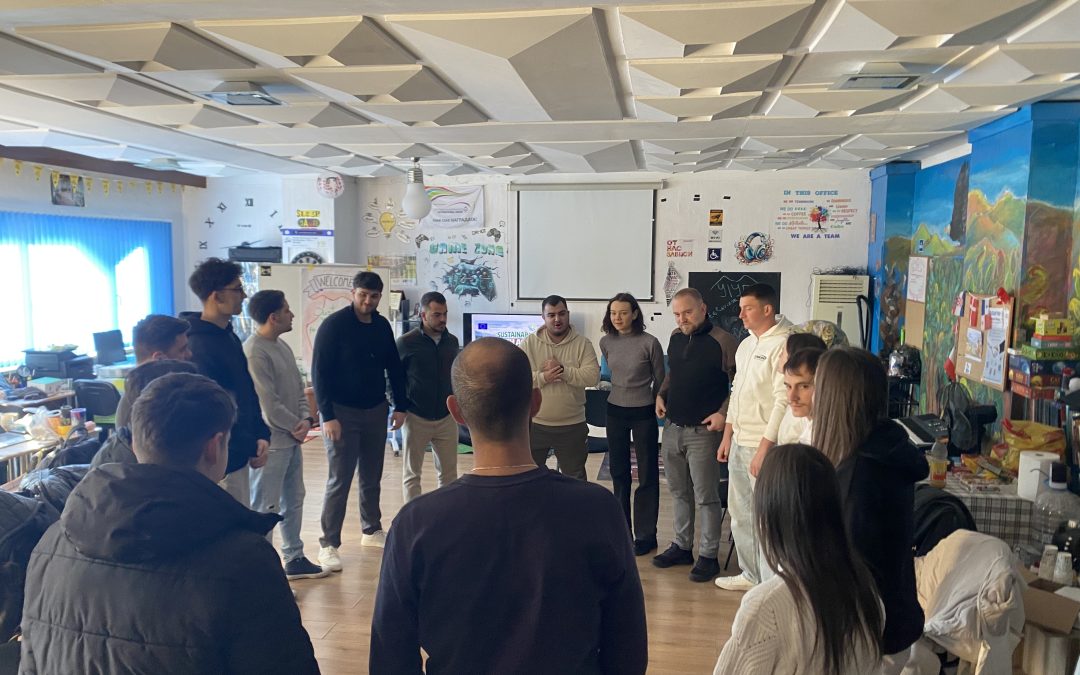
Today we moved from environmental responsibility to active citizenship and youth participation.
One of the most interesting discussions started with a simple question:
What does it actually mean to be an active citizen?
Voting was one of the first answers.
But very quickly our list became much longer.
Volunteering.
Expressing an opinion.
Organising an initiative.
Helping a neighbour.
Protecting the environment.
Speaking when something is unfair.
Participating in local decisions.
Creating something useful for other people.
We discussed democracy, equality, citizenship, human rights and the role young people can play in shaping their communities.
What made the conversation especially interesting was the international perspective.
Participants from Bulgaria, Romania and Greece compared how young people participate in their communities and what barriers often stop them.
Sometimes young people think institutions will not listen.
Sometimes they do not know where to start.
Sometimes they simply believe that somebody else should solve the problem.
Our activities challenged that mentality.
We worked with real examples and discussed how a local problem can become a youth-led initiative.
The goal was not to pretend that young people can solve every social issue alone.
The goal was to understand that participation starts when we stop seeing ourselves only as observers.
We also connected these conversations with European values.
Europe is not only institutions, programmes and borders.
It is also democracy, human dignity, equality, respect for diversity and participation.
For many of us, Erasmus+ makes these ideas easier to understand because we experience them directly.
We are sharing one space with people from different countries, cultures and backgrounds.
We have to listen.
Negotiate.
Respect different opinions.
And somehow still make decisions together.
In a small way, our international group is practising exactly the type of democratic cooperation we are discussing.
Tomorrow we will leave the training environment and take these ideas directly into the streets of Smolyan.
Disclaimer: Funded by the European Union. Views and opinions expressed are, however, those of the author(s) only and do not necessarily reflect those of the European Union or the competent programme authorities. Neither the European Union nor the granting authority can be held responsible for them.
by Futureforall | Dec 26, 2025 | Uncategorized
Environmental education becomes much more powerful when young people can connect learning with institutions responsible for protecting the environment in real life.
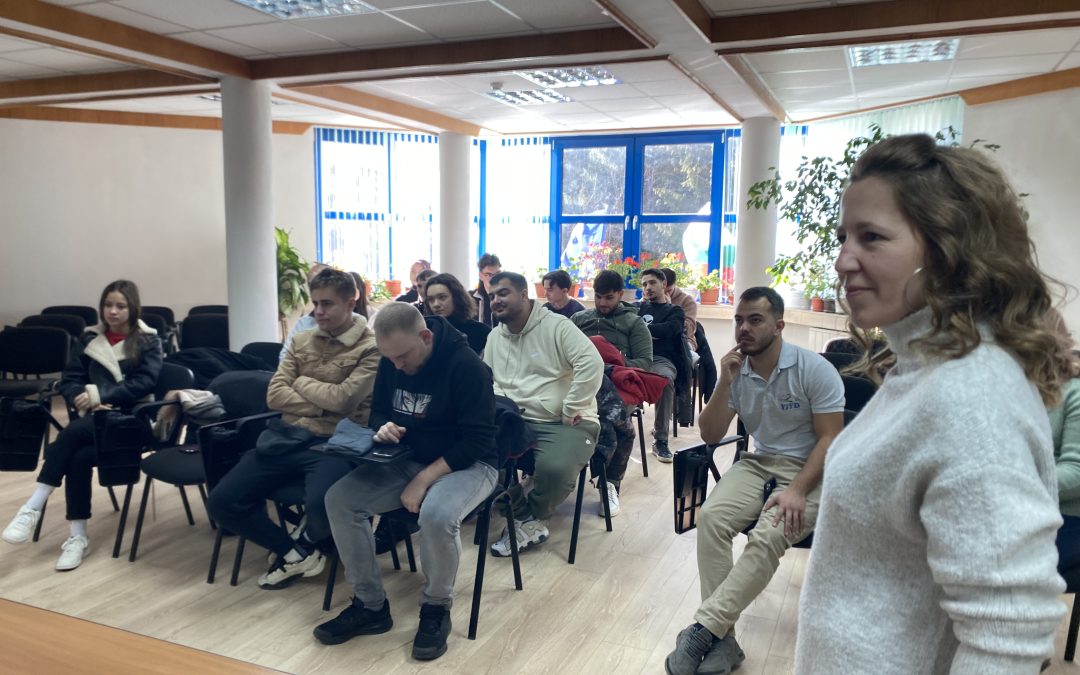
During the Erasmus+ Youth Exchange “Sustainable Youth Action for Community Impact,” participants had the opportunity to connect the project’s environmental dimension with the local institutional context through an educational visit to the Regional Inspectorate of Environment and Water – Smolyan (RIEW Smolyan).
The visit complemented the programme’s broader focus on sustainability, responsible behaviour and community action.
Throughout the exchange, participants discussed how individual choices influence the environment and how young citizens can contribute to sustainable communities.
The institutional visit added another perspective: environmental responsibility also depends on public systems, regulation, monitoring, expertise and cooperation between citizens and institutions.
For young people, this was an opportunity to understand environmental protection beyond social media campaigns or individual lifestyle decisions.
Environmental challenges require cooperation between citizens, civil society, municipalities, experts and public authorities.
The Rhodope region provides a particularly meaningful setting for such discussions.
Smolyan is surrounded by mountain ecosystems, forests and rich biodiversity. The relationship between local communities, tourism, natural resources and environmental protection is therefore visible in everyday life.
Participants could connect European discussions about sustainability with a concrete regional reality.
The visit also demonstrated an important principle of quality youth work: local stakeholders can become educational partners.
International mobility does not need to remain isolated inside a hotel or training venue.
By connecting participants with local institutions, organisations and community actors, the programme becomes more relevant and provides a more realistic understanding of how change happens.
For the Bulgarian participants, the visit increased awareness of an institution operating in their own region.
For the Romanian and Greek participants, it offered an opportunity to compare how environmental responsibilities and local ecological challenges are addressed in another European country.
The activity supported the wider objectives of the youth exchange: developing critical thinking, environmental responsibility, European awareness and a stronger connection between learning and community life.
The project therefore approached sustainability from several directions: educational content, sustainable travel, responsible consumption, community observation and institutional learning.
Together, these elements strengthened the message that environmental responsibility is not a single workshop topic.
It is a shared process involving behaviour, knowledge, institutions and active citizenship.
Disclaimer: Funded by the European Union. Views and opinions expressed are, however, those of the author(s) only and do not necessarily reflect those of the European Union or the competent programme authorities. Neither the European Union nor the granting authority can be held responsible for them.
by Futureforall | Dec 25, 2025 | Uncategorized
International youth mobility is also an opportunity to understand the place that hosts it.
For participants in “Sustainable Youth Action for Community Impact,” Smolyan was not simply the location written on a travel ticket.
The Rhodope Mountains became an important part of the learning experience.
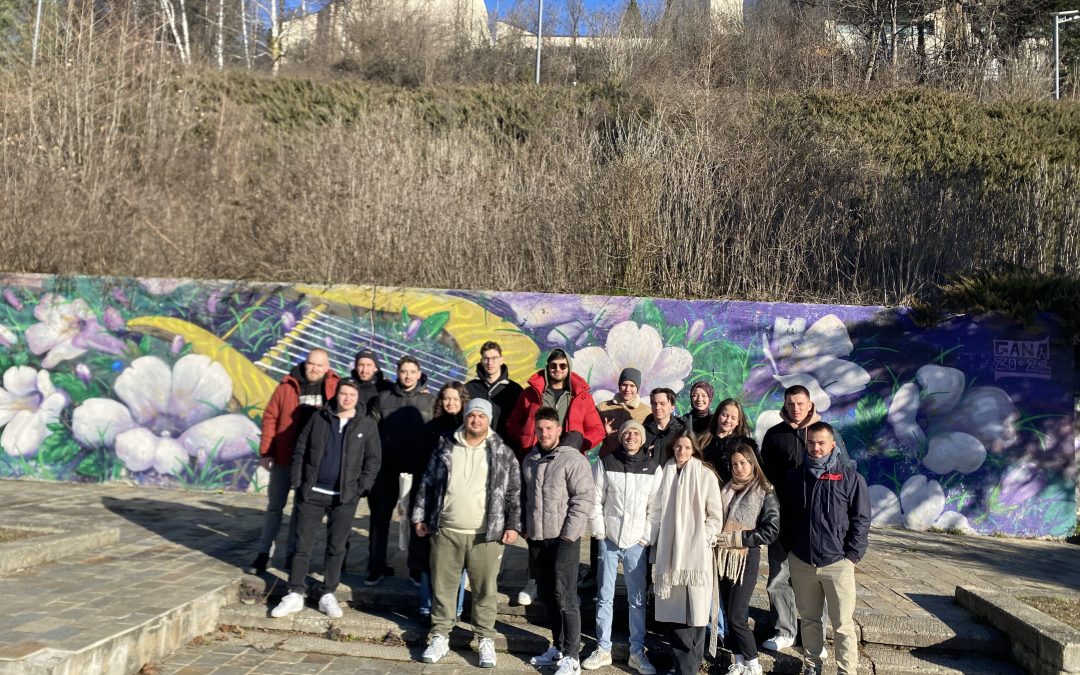
During the youth exchange, participants from Bulgaria, Romania and Greece explored elements of local history, cultural heritage, traditions and identity.
One of the themes appearing in their city missions was the legendary connection between the Rhodopes and Orpheus and Eurydice.
For international participants, the legend opened a door to understanding how mythology, landscape and regional identity can become closely connected.
Other challenges encouraged young people to discover local cultural references, Rhodope words, stories, food traditions and significant places in Smolyan.
This cultural exploration served a wider educational purpose.
Intercultural learning is most powerful when participants move beyond presenting flags, traditional dishes and national stereotypes.
It requires curiosity about how people understand their own community and why certain places, stories and traditions are important to them.
The international composition of the exchange made comparison natural.
Young people from Bulgaria, Romania and Greece could identify similarities in Balkan traditions while also discovering important differences.
These conversations created opportunities to discuss identity without presenting cultures as fixed or isolated.
Instead, participants could see how regional, national and European identities coexist.
The connection with Erasmus+ was particularly meaningful.
A young person can be deeply connected to the Rhodope Mountains and simultaneously feel part of a wider European community.
European belonging does not require abandoning local identity. In many cases, international exchange helps participants appreciate their own local culture more deeply because they must explain it to someone seeing it for the first time.
The participant feedback from the exchange supports this dimension.
All three group leader reports confirmed that the mobility contributed to greater openness to European multiculturalism and a stronger European sense of belonging.
That combination is significant.
The exchange encouraged young people to discover Europe not as something distant from local communities, but as a space where different local identities can meet, communicate and learn from each other.
From Orpheus to Erasmus+, the activity showed that cultural heritage can be a bridge rather than a boundary.
And in the Rhodope Mountains, a European youth exchange became an opportunity both to look outward towards Europe and inward towards the stories and values that shape local communities.
Disclaimer: Funded by the European Union. Views and opinions expressed are, however, those of the author(s) only and do not necessarily reflect those of the European Union or the competent programme authorities. Neither the European Union nor the granting authority can be held responsible for them.
by Futureforall | Dec 25, 2025 | Uncategorized
What happens when a city becomes a classroom?
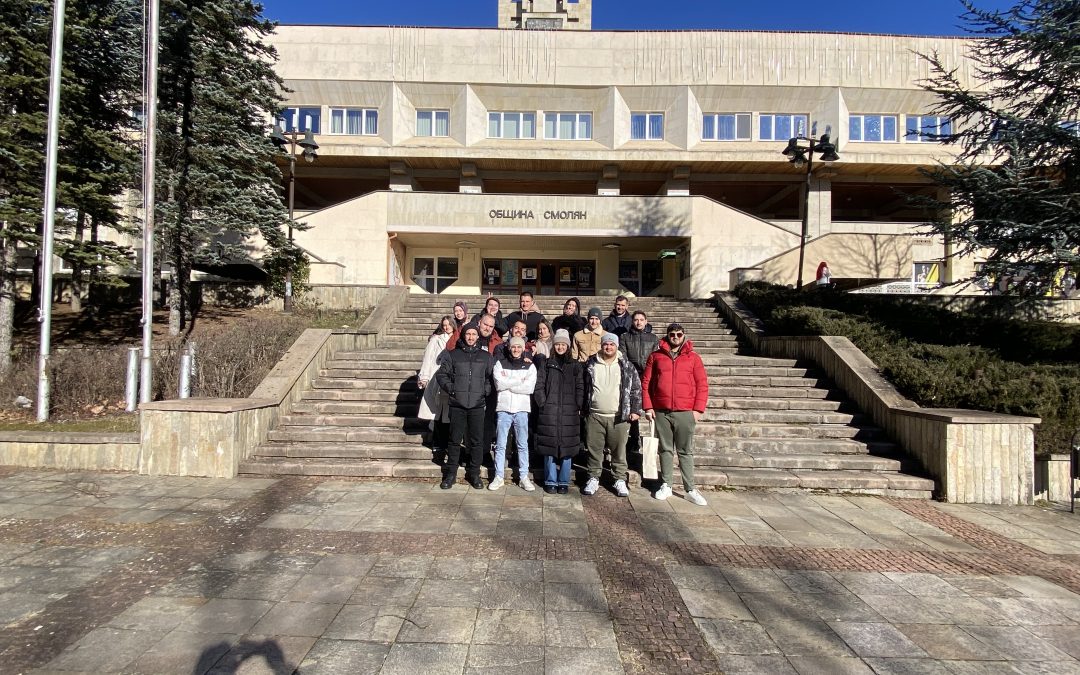
During the Erasmus+ Youth Exchange “Sustainable Youth Action for Community Impact”, participants from Bulgaria, Romania and Greece left the traditional training environment and explored Smolyan through an interactive community challenge.
Working in small international teams, the young people took part in a city-based mission combining elements of a treasure hunt, PhotoVoice, local research, cultural discovery and active citizenship.
The objective was not simply to find landmarks.
Participants had to observe, ask questions, communicate with local residents, document their discoveries and reflect on what makes a community strong.
The missions connected several dimensions of Smolyan.
Some tasks invited participants to explore local cultural identity and the heritage of the Rhodope Mountains. Others required them to speak with local people and collect opinions about the city, youth opportunities, community challenges and European programmes.
Photography became another learning tool.
Instead of taking pictures only as tourists, young people were encouraged to document elements of the city that represented strengths, challenges, traditions or possibilities for improvement.
This approach reflects the logic of PhotoVoice: using images to observe a community and stimulate discussion about what people value and what they would like to change.
The activity also challenged participants to communicate outside their international group.
Speaking with local residents required confidence, curiosity and creativity, especially when language differences appeared.
For some young people this meant stepping outside their comfort zone. For others it was an opportunity to discover that communication does not depend only on perfect language skills.
The city challenge also supported active citizenship.
Participants were encouraged to think critically about their surroundings rather than simply consume the city as visitors. What spaces are important for young people? Where can young citizens participate? What makes people feel connected to their community? What could be improved?
These questions turned a walk through Smolyan into a practical civic learning experience.
The activity reflected one of the central principles of Erasmus+: learning does not happen only through formal instruction.
Learning can happen while solving a challenge, interviewing a stranger, navigating a new city, working with someone from another country or discovering that a familiar social problem looks different from another cultural perspective.
By the end of the activity, Smolyan was no longer simply the host city of the exchange.
It had become part of the educational methodology itself.
The experience demonstrated how relatively simple non-formal education methods can combine cultural discovery, teamwork, media skills, civic awareness and intercultural learning in one activity.
Disclaimer: Funded by the European Union. Views and opinions expressed are, however, those of the author(s) only and do not necessarily reflect those of the European Union or the competent programme authorities. Neither the European Union nor the granting authority can be held responsible for them.
by Futureforall | Dec 25, 2025 | Uncategorized
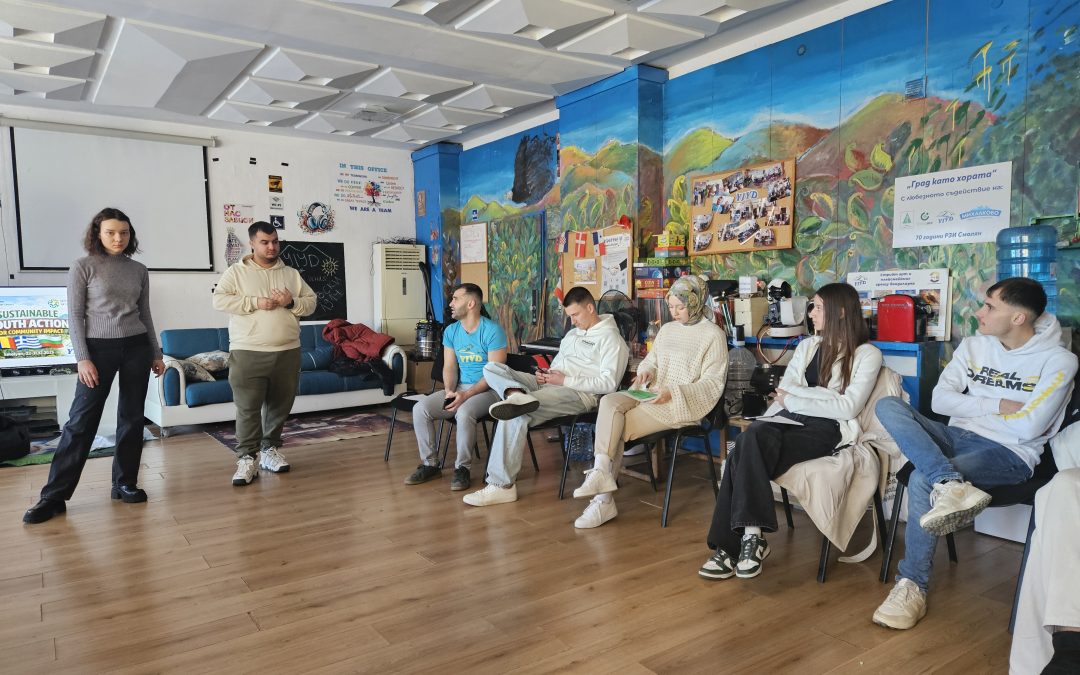
Today we went deeper into one of the main themes of our youth exchange: sustainability and responsible consumption.
Instead of starting with complicated definitions, we looked at our own everyday lives.
What do we buy?
How do we travel?
How much do we throw away?
How often do we choose convenience without thinking about its environmental impact?
Working in international groups helped us compare habits in Bulgaria, Romania and Greece.
Some practices were similar, while others were surprisingly different.
The important part was that nobody was expected to be “perfectly sustainable”.
The activities encouraged us to analyse our behaviour rather than judge each other.
Through discussions and practical group work, we explored the relationship between personal choices and larger environmental challenges.
One person changing a habit may seem insignificant.
But millions of people making the same decision can create a completely different impact.
Transport was another interesting part of the discussion.
Our own exchange gives a practical example: the project encouraged sustainable travel whenever possible. All 22 people involved in the Youth Exchange — 19 participants and three group leaders — were recorded as using sustainable means of transport.
That made the conversation much more real.
Sustainability was not something written only in the project description.
It influenced how we actually reached Smolyan.
We also discussed how young people can promote sustainable behaviour without sounding like they are constantly telling other people what they are doing wrong.
Our conclusion was simple: example is often stronger than preaching.
The day ended with another reflection session.
Many of us realised that environmental responsibility does not always require dramatic lifestyle changes.
Sometimes it starts with very ordinary decisions repeated every day.
Tomorrow we will connect these individual choices with another important question:
How can young people influence what happens in their communities?
Disclaimer: Funded by the European Union. Views and opinions expressed are, however, those of the author(s) only and do not necessarily reflect those of the European Union or the competent programme authorities. Neither the European Union nor the granting authority can be held responsible for them.
